Spider-Man: No Way Home (Spoiler) Review

*SPOILER WARNING AHEAD*

It has now been a good few weeks since the release of Spider-Man: No Way Home, so I decided it was about time I went into some more depth about the film which has not only redefined the story of Spider-Man, but also Marvel movies as a whole. Over the past few weeks I’ve seen a lot of articles saying NWH is the best Spider-Man film ever, and some even claiming it to be the best Marvel movie of all time. Whilst these statements could easily be contested, I very much understand them. Spider-Man: No Way Home is quite possibly one of the best superhero stories put to the big screen, and as I mentioned in my non-spoiler review, resolves any doubts about Tom Holland’s iteration of the character.

This film celebrates the cinematic history of one of pop culture’s most iconic heroes. The inclusion of nearly every pre-MCU Spider-Man villain makes for a triumphant nostalgia trip through Spidey history. There was not once where the film felt overcrowded with characters, because you know exactly who all these villains are and where they came from; what matters is the current story being told. Having had his identity revealed by Mysterio at the end of Far From Home, Peter is suddenly overwhelmed with the full force of the public eye. Not only that, but charges of murder are being made against Peter and his loved ones. Which leads me onto the biggest surprise of NWH for me personally – Charlie Cox’s return as the blind lawyer Matt Murdock. When I saw the blind stick being placed down as Matt Murdock took a seat alongside Peter, Happy and May, I could not contain my excitement. Netflix’s Daredevil series is without a doubt the best superhero show, as well as one of all-time my favourite shows. It led to Daredevil being one of my favourite Marvel characters (along with Spider-Man of course). Charlie Cox’s portrayal of the lawyer-by-day, vigilante-by-night was superb, and including him in NWH gets me excited for the potential reappearance of one of my favourite Marvel characters in the MCU.

Once the blind lawyer has helped Peter with his legal trouble, it doesn’t stop other forces from ruining aspects of Peter’s life and those around him. Seeking a wizard’s help to brainwash the world into forgetting he is Spider-Man rather than appealing for rejected MIT applications is such a Peter Parker thing to do. Whilst Doctor Strange is justifiably frustrated when Peter ruins his spell and discovers he didn’t even plead his case for MIT, you can’t help but think most of us would have done the same if we knew a Master of the Mystic Arts. Having unleashed all the previous Spidey villains into the MCU as a result of the spell, Strange tasks Peter with tracking them all down and sending them back to where they came from. When I heard Danny Elfman’s Doc Ock theme as the villain appeared on the bridge, I was hit with the nostalgic excitement I felt when watching Sam Raimi’s golden Spider-Man trilogy. Similarly, when the pumpkin bomb falls onto the bridge and you hear Willem Dafoe’s iconic Green Goblin laugh I could barely contain my excitement. It was also great to see Jamie Foxx reprise his role as Electro, providing a slightly more level-headed, quippy iteration of the villain to when we last saw him in The Amazing Spider-Man 2. The chemistry between the villains and Peter was probably one of my favourite parts of the movie. There are some moments which even poke fun at the clichés of villain backstories. Such as when Electro and Sandman are discussing how they became how they are and they discover they both fell into the wrong place at the wrong time – “Gotta be careful where you fall”. Yet another aspect of the film which celebrates Spidey’s cinematic history.

Now I could write all day about every little aspect of this film. About how they went as far as to reference a meme of Norman Osborn with the inclusion of Willem’s iconic line “I’m something of a scientist myself”. This simply shows the extent to which the filmmakers acknowledged pop culture. But I cannot write a spoiler review of this film without talking about one of the greatest crossover events in cinematic history. The triumphant return of Andrew Garfield and Tobey Maguire as their respective Spider-Men. When Andrew took his mask off I audibly went ‘OH SHIT’ in the cinema. I’ll start off by saying every scene with them was done perfectly. From the small details such as the use of the same sound effect for Tobey shooting his webbing to their discussion about the greatest villains they’ve fought. They both gave it their all, and they both encompassed everything we loved about the characters previously. Tom Holland’s Peter Parker suffers from quite possibly the greatest loss he’s experienced so far – the death of Aunt May. Little would I have guessed that a meaningful rooftop conversation with two other Spider-Men from different universes was exactly what he needed. The look on Tom’s face when Andrew tells him about how he lost the love of his life, Gwen Stacey, simply tells you he’s imagining what if the same thing happened to his MJ. When Tobey tells him about how he wanted the man who killed his Uncle Ben dead, and how it took him time to learn that vengeance doesn’t make it better, I had tears in my eyes. And then when the three Spider-Men agree on having heard the iconic line – ‘With great power, comes great responsibility’ it truly showed how much these films have encompassed the tragic tale of the wall-crawler. It showed that all of the different iterations of Spider-Man have told the same story, all of them have suffered loss, gone through the worst pain in their lives, but at the end of the day they keep doing the right thing because they are as Andrew puts it, the friendly neighbourhood Spider-Man. It really was a dream come true to see Tom, Andrew and Tobey on screen together. It was brilliant how much chemistry they had together, and having each other’s backs when they needed it most.

The bonding moments they share is unlike anything we’ve seen before. Tobey reassuring Andrew that he is ‘amazing’, meta-joke aside, shows how much companionship they provide each other, and how much Peter Parker effectively looks out for ‘himself’ in a way. Andrew’s greatest moment comes in the final battle when MJ falls from scaffolding and Tom being knocked aside by the Green Goblin, he leaps at the opportunity to save her. As he touches the ground with her in his arms safe and sound, he has that bittersweet sentimental look on his face that he was able to finally succeed where he once failed to save Gwen. It was the perfect healing moment for him seven years in the making. Tobey’s greatest moment comes when he stops a vengeful Spider-Man (Tom Holland) about to murder the Goblin with is own glider, stepping between them and matching his Spider-strength with Tom’s. Again, this was a perfect payoff moment for Tobey’s Spider-Man – preventing a younger, vengeful Peter Parker from making the same mistake he once did, ironically reflecting his own final battle with the very same Goblin, except this time stopping it from ending with the Goblin being killed by his own glider.

At it’s core, NWH is a story about what it truly means to be Spider-Man. When you strip away the appearances of previous heroes and villains and its multiversal elements, it’s a story about what a person is willing to sacrifice to do the right thing. At the end of the film, Peter chooses to lose everything to save everyone from the damage he had previously caused. He chooses to lose his loved ones by allowing everyone to forget Peter Parker. Recalling a line from Tobey’s Peter in Spider-Man 2 – “To do what’s right we have to be steady, and give up the thing we want the most – even our dreams.” Almost 20 years later, the same line is reflected in yet another Spider-Man story, which I think truly shows how timelessly beloved this character is. This line is especially reflected when Tom’s Peter Parker visits MJ after she no longer remembers him, and he decides not to get to know her again. After seeing the plaster on her forehead, subtly reflecting the damage caused to Peter’s loved ones by being Spider-Man, he decides to disassociate himself with her to keep her safe. The film closes with Peter on his own in his own apartment, making a classic comic book suit all by himself, swinging through a snowy Rockefeller Plaza. What truly makes this film one of the greatest Marvel movies of all time, is that it celebrated the cinematic history of Spider-Man, and showed the lessons from it are what took Tom Holland’s Peter Parker to truly become Spider-Man. He no longer has Tony Stark to make him billion-dollar suits, he no longer has the Avengers or anyone else to rely on. It took learning the lessons of loss and responsibility from Tobey and Andrew’s Spider-Men, and to learn those lessons first-hand himself, to truly encompass what it means to be Spider-Man. A famous director once said Marvel films aren’t cinema because they don’t give us enlightenment, knowledge and some inspiration. I respectfully disagree – movies like NWH inspire me every day, and only further solidify Spider-Man’s place in not only my heart, but in the hearts of countless others. The lessons we learn from heroes like Spider-Man provide us with enlightenment, knowledge and inspiration by showing us what it truly means to be a hero. That is, despite the loss, pain and responsibility, doing the right thing is worth it. And you don’t need to be a wall crawler to be able to do the right thing.
Let’s settle this: What makes a Christmas movie?

Being the passionate movie-goer that I am, there is nothing better I enjoy more than watching Christmas flicks back-to-back to get into the festive spirit. Stories of children, elves, and Grinches learning the true meaning of Christmas never fails to bring warmth to my heart and cause my lip to quiver. The 24th and 25th of December are the two days of the year I assign exclusively to watch Polar Express, Gremlins, Home Alone and whatever others I can fit amongst all the other festivities. As such, I tend to be very strict when it comes to indulging in movies which promote Christmas spirit – it wouldn’t sit right with me watching Polar Express in the middle of August! However, there are other films which are often regarded as ‘Christmas’ films that I would not exclusively watch in December.

Before I continue, I’d like to state that the following is purely my opinion and should only be taken as such. I simply wish to weigh in on a very important matter as an avid movie-goer – what truly makes a ‘Christmas’ movie? Currently being the festive season, I have seen a lot of films (and some TV shows) categorised under ‘Christmas’ which I would respectfully disagree with. A prime example is the very thing which sparked me to write this blog – Iron Man 3 being categorised as a Christmas movie. Iron Man 3 is ultimately the conclusion to the (red) and golden Iron Man trilogy starring Robert Downey Jr. It takes a deranged lava-man and a British actor posing as a terrorist for Tony Stark to learn his greatest lesson – if you’re nothing without the suit, then you shouldn’t have it (a lesson he later bestows upon Peter Parker in Spider-Man: Homecoming). It seems the reason why Iron Man 3 has been regarded as a Christmas movie is because much of the plot is set during Christmas time. As much as I love to see an Iron Man suit-up scene to a funky rendition of Jingle Bells, this does not make it a ‘Christmas’ movie. This leads nicely onto my main argument – a film whose plot itself is unrelated to Christmas, yet is set during Christmas time, does not make it a Christmas film. The most controversial example of this is Die Hard. Funnily enough being the last film I watched at the time of writing this, I would argue the same for Die Hard. As much as I enjoy Bruce Willis crawling through vents and Snape’s pre-Hogwarts crime phase, I would argue that Die Hard is not a Christmas movie simply because the plot does not actively revolve around the theme of Christmas. Ironically it took me watching it for the first time on Christmas Eve to realise this.

So what does make a Christmas movie? Now, I’m not saying there’s anything wrong with watching Iron Man 3 or Die Hard for the sake of Christmas time. However, if you wish to get into the Christmas spirit by watching films, personally I would recommend a film whose plot is specifically about just that. Many of us spend all year counting down to Christmas; the intrinsic feeling of joy, spreading kindness, hope for the new year, and for many what is one of the few times of the year we can sit down and appreciate the comfort of our loved ones. Elf, Polar Express, The Grinch, are all staples of the Christmas season and lovingly encompass these feelings. But for me personally, an example of a Christmas film which perfectly encompasses the meaning of Christmas is Home Alone. Whilst much of the enjoyment of Home Alone come from watching Kevin (Macaulay Culkin) give Marv (Daniel Stern) and Harry (Joe Pesci) their comeuppance, I gain a much deeper level of enjoyment unlike any other film. The freedom and independence of being alone in a huge house, combined with the innocence and care-freeness of childhood, brought a level of escapism in Home Alone which I had never experienced in a film before. But to its core, Home Alone teaches us we often only truly appreciate something when it isn’t there. This is reflected in not only Kevin’s family leaving him, but also the sad story of Marley’s (Roberts Blossom) estranged relationship with his son. I have not once watched the ending of the film without welling up – when Kevin is reunited with his mother and sees Marley hugging his son for the first time in years. To me this is precisely what Christmas about – taking the opportunity to escape the quarrels and stresses of every day life and appreciate the things which we hold dearest. So taking it from me, if you wish to embrace the full capacity of the festive spirit, indulge in films which encompass this message and remind us to show our appreciation and kindness for those around us. That’s what Christmas films mean to me.

Merry Christmas from your friendly neighbourhood Spider-Man…

Spider-Man: No Way Home is a love letter to everything Spidey

The day was Wednesday 15th December, 2021. The time was approximately 21:42. A young man had just walked out of one of the first screenings of Spider-Man: No Way Home. This young man had been a Spidey fan ever since he was a young boy climbing in trees and collecting Spider-Man figures from Sam Raimi’s Spider-Man trilogy. He had been there for every new Spider-Man film for as long as he could remember, and was very well informed on the comic book origins and timeline of the web-slinger. He knew that what it meant to be Spider-Man was not to have the proportionate strength, speed and ability of a spider. He knew what it meant to be Spider-Man was Peter Parker. A young man, a similar age to himself, who suffered and lost what he held most dearly as he battled between his life as a masked vigilante and a broke but clever student from New York City. On that particular Wednesday, the young man had never been in such awe of the web-slinger who had held such a close place in his heart ever since he was a young boy. That young man, was yours truly.

Spider-Man: No Way Home is a triumphant love letter to everything which makes Spider-Man, Spider-Man. It not only has its much needed doses of fan service, but it is quite possibly the best Spider-Man story to be portrayed on the big screen. The main cast gives it their A-game, from Tom Holland as the titular hero to Alfred Molina reprising his role as Doctor Octopus. For those skeptics who saw Tom’s Spider-Man as nothing more than Tony Stark’s golden teenager, No Way Home proves that Tom can in fact encompass what it means to be Spider-Man, which quite possibly makes him the best iteration of the character to date. He goes through things in the film which no previous Spider-Man has gone through before, yet they are experiences which ultimately defines what it means to be Spider-Man. The film not only changes the course of the Marvel Cinematic Universe, but also the course of the story of Spider-Man on the big screen. It is in a sense the Avengers: Endgame equivalent for Spider-Man. The stakes have never been higher, and the addition of Benedict Cumberbatch’s Doctor Strange adds for some intense multi-versal elements we have not yet seen on the big screen in the MCU. The fight scene between Spider-Man and Doctor Strange is impressive enough to rival Strange’s spectacular battle with Thanos in Avengers: Infinity War. Taking inspiration from one of the most controversial Spider-Man stories in the comics, ‘Spider-Man: One More Day‘, the film places some MCU twists on the comic storyline whilst still remaining relatively true to the source material. It was brilliant to see so many iconic Spidey villains on-screen together in live action, giving us what is essentially the closest version of a live-action Sinister Six (even though there wasn’t quite six). It is often difficult to have so many supporting characters on-screen without making a film feel crowded, but No Way Home somehow does it perfectly. The villains’ chemistry with not only Spider-Man, but also each other, was one of the best aspects of the film which I was pleasantly surprised by. I genuinely could not stop myself from grinning all the way through the film, it made me feel so lucky to be a film fan, a Marvel fan, but most of all, a Spider-Man fan.

I would be interested to watch this film from the perspective of a non-Marvel or Spider-Man fan, as I have no doubt there is still much enjoyment to be found. To the casual cinema-goer, Spider-Man: No Way Home is nothing short of the story of a young boy becoming a young man. It is a story of how far a person is willing to go to do the right thing. It is a story of an average teenager attempting to balance his normal life with the responsibility of being a superhero, which is exactly what Spider-Man is all about. The film shows that no matter how much loss and suffering Peter Parker goes through he is still willing to make sacrifices to do the right thing, which is exactly why we love him. Any doubt about Tom’s iteration of Spider-Man is gone by the end of the film. He truly epitomises what it means to be Spider-Man and Peter Parker, and the film makes it clear that the person who does the right thing is not Spider-Man, but Peter Parker.

Stay tuned for a spoiler-filled blog…

Just hanging around…

How Ghostbusters: Afterlife is fan service done right

Fan service is a hard thing to nail. When dealing with a beloved classic like 1984’s Ghostbusters, there’s a very thin line between using fan service just to make a movie good and encapsulating the nostalgia which made the original such a cultural phenomenon. 2016’s Ghostbusters directed by Paul Feig undoubtedly leans more into the latter than the former. It focuses too much on attempting to pander for fans of the original than creating an original story which pays appropriate homage to the original when necessary. This year’s Ghostbusters: Afterlife however is a triumphant love letter for fans of the original. It provides an engaging original story with new, likeable characters, and provides appropriate plot links to the 1984 original rather than bombarding the audience with pure fan service.

Ghostbusters: Afterlife takes place 32 years after the events of Ghostbusters II, effectively acting as a ‘Ghostbusters III’. It follows single mother Callie (Carrie Coon) and her two children Trevor (Finn Wolfhard) and Phoebe (McKenna Grace) as they move into an old house in a small town in rural America with an unusual link to the original Ghostbusters. The film is of course littered with references to the original, but unlike the 2016 Ghostbusters film, they’re actually more relevant to the story and feel ‘earned’ in a sense. It is directed by Jason Reitman, the son of the original director Ivan Reitman. Interestingly there’s a few horror elements thrown into Afterlife which perhaps distinguishes the directorial style between father and son, as the original focused primarily on comedy. Nevertheless, the laughs of Afterlife consist of McKenna Grace’s endearingly dry dad jokes, Podcast’s (Logan Kim) running commentary on the supernatural events, and of course Paul Rudd being Paul Rudd. As soon as I heard they were doing a new Ghostbusters film featuring Paul Rudd and Finn Wolfhard – I was in.

Interestingly I only watched the original Ghostbusters for the first time a couple of years ago, so I wouldn’t have experienced the same level of nostalgic throwback watching Afterlife than some of the OG fans. The original is such a loveably unique film, and I could appreciate how Bill Murray, Dan Aykroyd, Harold Ramis and Ernie Hudson made it an instant cult classic. The 70s and 80s gave rise to several of the classic supernatural horror films such as The Exorcist and Poltergeist. So naturally a film about about a group of paranormal enthusiasts forming what was effectively a ghost pest control service was probably exactly what audiences needed. Also, I can’t write about Ghostbusters without mentioning Rick Moranis. I think he quite possibly makes not only the first film for me, but also the 1989 sequel. For me, Ghostbusters took a very fearfully daunting concept and made it something audiences could laugh at. It showed that even the darkest concepts can be made light of, and that what we perceive as scary is very often determined by Hollywood and pop culture. Now whenever a supernatural film freaks me out to the point where I’m paranoid over the smallest sounds during the night, I just think of Rick Moranis walking out of the NYC firehouse in his Ghostbuster get-up to the sound of Ray Parker Jr’s titular track.

In a world where reboots, remakes and re-imaginings are abundant in cinema, it was nice to have what felt like a legitimate follow-up to a cult classic. I recently wrote about the latest edition to the Halloween franchise, Halloween Kills, in a previous blog, which similarly acts as a direct follow-up to the original decades later and also pays appropriate homage when due. Revitalising a classic franchise by producing a sequel set decades later in real time has become more and more common in the past decade or so. There are many examples of this which have done what I have come to refer to as ‘Force Awakening‘ a franchise; including Jurassic World, Tron, Star Wars of course, and the upcoming Matrix: Resurrections. Whilst I think this is generally the right way to go about revitalising beloved classics, it is a very tricky thing to do right, not only by the franchise but by simply producing an enjoyable film in its own right. Providing a modern day perspective on events of a classic can provide new generations of audiences (such as yours truly) with an appreciation for the by-gone ages of cinema. It is for these reasons I believe that Ghostbusters: Afterlife is a fan service film done right. It nails the nostalgia without pandering too much for the fans, and provides an entertaining new story for old and new generations of audiences. There are also some surprises along the way which I was not expecting, and are undoubtedly best experienced by watching the film first-hand.

From Spaced to Soho: The Underrated Brilliance of Edgar Wright

Most film directors have a particular signature style. Spielberg does the heartfelt family films with a fantasy element, Tarantino does the tight dialogue and paints the set with fake blood, and Kubrick seemingly does whatever he wants no matter how weird and wonderful. Now these directors (and any other big names you may think of) also tend to stick to the same genres. But what if there was a director with a signature style that could be adapted to almost any genre? Enter Edgar Wright. When I first heard the director of the Cornetto Trilogy and Baby Driver was doing a psychological horror, I experienced intrigue and excitement which I hadn’t felt for any other upcoming film. Not only is Last Night in Soho a beautifully crafted film which allows the past and present to converge, but it is proof that Edgar Wright can take on almost any genre and make it his own. This is something I believe not many other directors can do, and the exact reason why Wright deserves to have his name up there with the greats previously mentioned.

I spent years with Shaun of the Dead on DVD having never watched it, so when I finally got around to watching it I completely understood why everyone had egged me on to watch it for so long. Wright drops the everyday British man into a zombie apocalypse and produces some hilariously relatable results. Who knew a film about a zombie apocalypse would make me want to go for a pint? I then watched Hot Fuzz for the first time shortly after, and it did not disappoint either. A buddy-cop movie with Simon Pegg and Nick Frost apprehending a group of murderous pensioners in a quiet country village was exactly what I didn’t know I wanted. The rapid montages, music-scene synchronisation and unique use of every day sounds are just some of the little delights about Wright’s filmmaking style we’ve come to love. The first thing I think of when someone says Edgar Wright is a series of rapid close up shots of pints being poured followed by Simon Pegg saying “A man of your legendary prowess drinking fucking rain!” Many may find World’s End‘s sci-fi twists an unusual jump which doesn’t quite live up to the comedically apocalyptic vibe of Shaun of the Dead. I however believe the idea of a group of men on a pub crawl being forced to deal with an alien apocalypse is a brilliant concept which Wright makes his own. Simon Pegg and Nick Frost make these films undeniably British, from their outrageous quips to their relatable back and forths, they truly are one of Britain’s most iconic duos.

What many may not be aware of is that one of Wright’s first projects was a quirky, cozy little sitcom called Spaced. It brought Wright, Pegg and Frost together for the first time and is often regarded as the series which acted as the ‘catalyst’ for the Cornetto Trilogy. It stars Tim (Pegg) and Daisy (Jessica Hynes) as a couple of broke youths who pretend to be a couple in order to rent a place together. The series establishes many of the Edgar Wright-isms we’ve come to know and love. There is one scene in particular which lays down the foundations for Shaun of the Dead. Spaced gives me a very cozy feeling that we are all in our own little worlds dealing with our little gripes and annoyances, and we deal with them in hilariously embarrassing ways. I would recommend watching Spaced to any fan of the Cornetto Trilogy and anyone who would enjoy a unique, quirky British sitcom.

Wright’s movement into other genres and into American cinema has also proved to be some of his finest work. Scott Pilgrim Vs. The World is his brilliant adaption of the comics of the same name, and goes all out in the comic book accuracy. All of these debates on how accurate films are to the source material could be resolved if every film was like Scott Pilgrim. The film quite literally feels like a real-life comic book; the titular character falling in love with a girl and having to defeat her ‘seven evil exes’ in several video game-style fight scenes which are spectacles to behold. I could go on and analyse how Wright’s unique use of music and sound effects make this comic book come to life, but I don’t need to. It is something simply worth experiencing for yourself. And what can I say about Baby Driver which hasn’t been said already? This film is arguably not only the best heist-action film ever made, but it quite possibly has the best soundtrack of any film I’ve ever watched. It introduced me to a whole new generation of music I was shocked I’d never heard sooner. Wright’s use of popular songs exaggerates the thrills of an action scene and makes you almost wish you were a getaway driver. Whilst the plot about a young getaway driver dealing with working with a series of different criminals is fun and unique, this film isn’t even about the plot. It’s about the thrills, the music, and placing yourself in the shoes of a criminal trying to find his way. Once again, it’s possible to write a book analysing every shot, sound, and scene in this film. But for me, Baby Driver is a film which simply needs to experienced to appreciate the fine filmmaking creativity it produces.

To me, Last Night in Soho is almost like the cherry on top of Wright’s multi-genre spanning cake. Wright takes a frighteningly real concept and turns it into a psychological horror. The present and the past clash as young fashion student Ellie (Thomasin McKenzie) begins dreaming of a star-studded 1960s Soho, observing the life of aspiring singer Sandie (Anya Taylor-Joy). But the film reminds us how quickly dreams can become nightmares, and how what we want is not always what it’s cut out to be. The stunning lighting of 1960s Soho, and a retro soundtrack which challenges the likes of Baby Driver’s soundtrack made me feel like I was truly looking through a window into the past. I’m so happy for Edgar Wright. The man has proved he can successfully make any genre his own, using his unique style of filmmaking to make us enjoy the genres of film we love that little bit more. I’d highly recommend watching Last Night in Soho, whether you’ve watched any of Wright’s previous films or not. I’ve been playing the soundtrack on repeat and it’s made me rewatch some of Wright’s earlier films yet again! I cannot wait to see what Wright brings us in the future, and whatever it is, I’ll be there for it.

Why Halloween (1978) is the perfect horror film

Let me just start by saying John Carpenter’s 1978 Halloween is not a perfect movie. Some of the acting is a little choppy and the characters do make some pretty illogical cliché horror movie decisions which don’t do them any favours. Nonetheless, the movie was of its time and it has created some of the underlying staples of horror movies we still see today. Not to mention that the Shape itself, Michael Myers, has become not only one of the greatest horror icons of all time, but one of the greatest movie icons of all time. And what is the horror villain without his scream queen? Laurie Strode (Jamie Lee Curtis) is one of the most iconic scream queens of all time. The movie makes it clear early on that Laurie isn’t a typical damsel in distress who only has sex, drugs and rock and roll on her mind. Laurie is the one who looks out of windows, checks to see if someone is watching her and is genuinely a really good babysitter. By today’s standards, the movie is a plethora of horror movie clichés we are all too familiar with. When you reflect however on the cinema of the time and what John Carpenter did, you may realise that it was in fact 1978’s Halloween which effectively established these clichés. So much so that I believe there is a little bit of Halloween in every horror film.

Before John Carpenter’s Halloween, there wasn’t much in the way of suspenseful cinema about a psychotic killer. The major exception of course being Alfred Hitchcock’s Psycho back in 1960 which combined screechy violins with a crazed killer who made people afraid to step in the shower. Other major horror flicks of the 1970s included the over-the-top slasher Texas Chainsaw Massacre, contrasted with more suspenseful, supernatural outings like The Exorcist and The Omen. So, what if someone came along and combined the violence of Chainsaw and Psycho with the suspense of Exorcist and Omen? In 1978, that is exactly what John Carpenter did. Carpenter’s Halloween completely redefined horror when it combined an ominous killer with slow-burning suspense. Halloween isn’t about the violence or gore, it is about making you fear the simplest of things like walking through your neighbourhood and making you look over your shoulder wherever you go.

Just as 1975’s Jaws made audiences uncomfortable to go to the beach, 1978’s Halloween made audiences uncomfortable walking around their neighbourhood in broad daylight. Like a predator stalking its prey for hours to get the perfect kill, Michael spends most of the film stalking hapless teenagers who are too wrapped up in their own lives to see him watching them. Watching the film today you can easily figure out which characters will be the first to bite the dust and which ones will live to see the end. At the time however what made the film so significant was the way in which it used suspense to keep the audience so tense. You knew Michael was going to catch his prey at some point, but the little nuances in the film made it unclear of when he was going to strike. Little nuances like camera shots which were shot as if someone was stalking the characters in frame, or straight up POV shots from Michael’s perspective to show how no matter where they were, Michael was always there. I think one of the scariest aspects of horror films is when something ominous is in the background of a completely normal shot. It is ridiculously unsettling and creates a false sense of security that no one, nowhere, is safe. So when the car Michael escapes in drives past right behind Loomis (Donald Pleasence) in broad daylight you can’t help but think or say out loud HE’S RIGHT THERE. This is a technique used in so many horror films today and it never fails to send a shiver down my spine.

Another big reason as to why I believe Halloween was so culturally impactful was the way in which it successfully dehumanised a person. It’s all well and good having an ominously powerful serial killer as an antagonist to a horror film, but Halloween effectively produced the perfect killer in every sense of the word. Michael doesn’t speak a word for the whole film, the only sound he makes being the iconic breathing used so effectively to signal his presence. Nor do you get a proper glimpse of his face for the entire film, hidden beneath that blank, white, plain William Shatner mask (with the exception of a brief shot of his face as 6-year-old child after he kills his sister Judith Myers). Similarly to what makes Heath Ledger’s Joker so effective in The Dark Knight, Michael Myers has no backstory, no background, no other motives; he just causes harm because he can. Even the iconic boiler suit could be considered to be one of the plainest things a person could wear. Encompassing all this into one creates not a person, but a ‘Shape’ as Michael is famously referred to. That is exactly why Michael Myers is the perfect killer, because he is not a person, he is merely a shape. John Carpenter completely strips a person of everything it means to be human to create the perfect killer, which is why it works so disturbingly well. As Donald Pleasence’s Loomis puts it in the most impactful dialogue of the film – “The blackest eyes, the Devil’s Eyes…what was living behind that boy’s eyes was purely and simply evil.” That is why Halloween was so impactful, it explores the essence of evil and divulges into what it takes to make a person purely and simply, evil.

Such a culturally impactful film has spawned hundreds of follow-ups, not only within the Halloween franchise itself but in the slasher and horror genre in general. It paved the way for films like Friday the 13th, Nightmare on Elm Street, and even the slightly more camp slasher Child’s Play. Not only that, but it also spawned several parody movies such as Scream and Scary Movie which poked fun at the clichés and tropes which were so elegantly established in the original Halloween. 1978’s Halloween showed how infamous a mask and a name can become, and showed how slashers do not have to be violence-centred, but can use suspense effectively to get under the skin of audiences when they least expect it. I would even go as far as to say that the way Halloween used suspense has popped up in non-horror films as recently as the new Bond film, No Time to Die. That in itself shows how far cinema has come yet still employs the same methods of suspense from John Carpenter’s low-budget 1978 film. So far I have enjoyed the newest editions to the Halloween franchise; 2018’s Halloween and this year’s follow-up Halloween Kills. Not only are they essentially a re-imagining of the 1978 classic but with 2010s horror make-over, but they pay brilliant homage to the original by keeping what makes Michael Myers ‘The Shape’ in every sense of the word. If you’re a Halloween fan or a horror fan in general you’re bound to find some enjoyment out of the newest films. But just remember to lock your doors and windows when you leave the house, because you never know who could be watching you from afar…

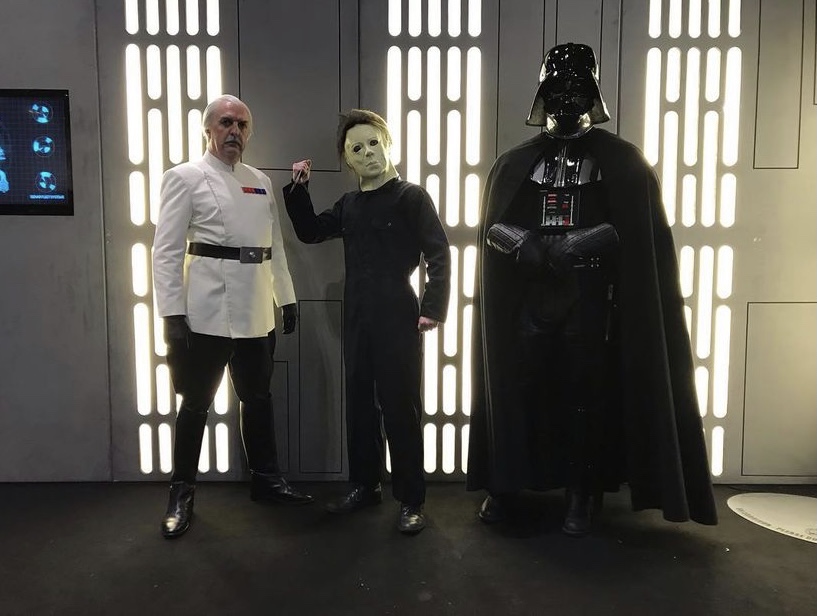
A picture of me at Comic Con dressed as Michael Myers with an impressive Vader costume and an Imperial Officer

Venom: Let there be Carnage is absolute carnage (in a good way)

‘Eddie Brock is you, and I’m the suit, so call me VENOMMMM’ as Eminem so eloquently put it in his 2018 song ‘Venom’ – this is how I felt walking out of Venom: Let there be Carnage. My hat (or symbiote) goes off to Andy Serkis. For a man highly respected for his career of portraying motion-capture creatures on screen for two decades now, he knew exactly what the Venom sequel needed and his direction of Venom: Let there be Carnage left me wanting more symbiote action on the big screen. The film brings one of Marvel’s greatest anti-heroes to showdown with one of their craziest villains, and it is truly spectacular. I can’t imagine even Spider-man being able to deal with the carnage of these two clashing!

I always viewed 2018’s Venom as a severely underrated comic book movie about an anti-hero. Tom Hardy absolutely kills it as the failing reporter Eddie Brock and does a terrific job voicing Venom (to this day I still question how much of Venom’s voice is purely Tom). It was a Marvel movie that took the anti-hero trope more seriously than movies like Deadpool, but at the same time didn’t take itself too seriously. The case is the same with Venom: Let there be Carnage. Andy Serkis knows he’s dealing with two of the craziest characters in the Marvel universe, and delivers what feels like a comic book or extended episode of the 90s animated Spider-man series (which turns out is what it was partially based on!). I think that is the beauty of Marvel. It can be as family-friendly as a man picking up a shield or hammer but can also successfully produce a movie about two aliens biting people’s heads off. Whilst a more mature-rated Venom movie would have been interesting, I’m glad Andy Serkis chose to push the limits of the 15-rating as to appeal such a brilliant film to a wider audience!

I mentioned how brilliant Tom Hardy is as both Eddie Brock and Venom in the first film, and if anything he’s even better in the sequel. One of my favourite aspects of Venom: Let there be Carnage was how much more it explores Eddie and Venom’s relationship and what it’s like having to live with each other. Since the first film, Eddie has worked very hard to get somewhere in his life, and so tries his very best to keep the fact he has an alien symbiote inside him on the down-low. Mixed with Venom’s impatient temperament to eat human brains, this creates some very entertaining sources of conflict. This film also further nails the trope that Venom really is the anti-Spider-man. Venom and Eddie make plenty of hilarious Peter Parker-style quips, except with darker twists. Furthermore, Eddie teaches Venom how to do the right thing whilst still satisfying Venom’s need to eat humans by becoming the ‘lethal protector’; restricting Venom’s diet to exclusively bad people. Ten years ago if you told me there would be a successful comic book film about a superhero who eats people I would’ve probably laughed at the possibility.

My other favourite thing about Venom: Let there be Carnage was of course, Woody Harrelson as the serial killer Cletus Kasady and the titular villain, Carnage, whom Cletus Kasady bonds with. Carnage is a Marvel character I have long-awaited to see live action on the big screen. Imagine a bigger, badder, redder and crazier Venom and you have Carnage. The first time I came across Carnage was several years ago when I read the comic ‘Deadpool Vs. Carnage’ which was a brilliant short story about what happened if the merc with a mouth clashed with an insane alien serial killer. The story arc with Carnage in the 90s animated Spider-man series stood out to me as well; forcing the anti-Spider-man to essentially clash with the anti-Venom. So my anticipation at seeing Woody Harrelson saying ‘There’s gonna be carnage’ in the Venom mid-credits scene was unparalleled. Harrelson nails the unhinged, red-neck Cletus Kasady and made me question whether I should be so entertained by a psychotic serial killer. Harrelson also voices Carnage which was great, and there is one line at the end of the film which genuinely gave me goosebumps. Together, Andy Serkis and Woody Harrelson perfectly encapsulate what it means to be one of the craziest characters in the Marvel universe, and ensure Carnage truly lives up to its name.

Venom: Let there be Carnage satisfied my hunger for a symbiote showdown, and left me wanting more. Other cast members such as Stephen Graham as detective Patrick Mulligan and Naomi Harris as the new super-villain Shriek were welcome additions to the plot. They added unique dynamics to both Eddie and Cletus’ struggles in dealing with having crazed alien symbiotes inside them, especially considering Shriek’s superpower is essentially their weakness… Even if you haven’t seen the first Venom, this film will provide an entertaining, crazy sci-fi romp through one of Marvel’s most underrated comic book storylines. In fact, if you haven’t seen the first Venom – go watch it! And when you have, it is imperative you go and watch Venom: Let there be Carnage whilst its still in cinemas. It is as good as if not better than the first Venom. Oh, and even if you’re not a die-hard Marvel fan, stick around until after the credits…it’ll be worth it to see the reactions of the die-hard Marvel fans…

From Dr. No to No Time to Die: My experience watching all 25 Bond films

On 5th October 1962, Dr. No was released in cinemas and kick started a global phenomenon and an integral part of British pop culture. 59 years later, on 5th October 2021, yours truly went to the cinema to watch the 25th James Bond film; No time to Die. Obviously you’d have to be very lucky to meet someone who has seen every single Bond film in the cinema, that would be incredible! However, thanks to the fantastic modern technology which is Blu-ray, over the past year I have watched through 24 Bond films with my dad at home. Now having watched the 25th and Daniel Craig’s final instalment as 007, and I can say that these films really stand as a testament to how much cinema and British culture has changed over the past 60 years.

The main similarity I found all the Bond films to have, whether it was George Lazenby or Daniel Craig, was that they all had the same ‘essence’. No other spy or action movies could capture the same essence as the Bond films. It’s almost like the Bond films have a secret recipe. The same ingredients, just different flavours. Sean Connery is the classic Victoria sponge cake, whilst Daniel Craig is the more zesty red velvet cake. The ingredients include a far-away, exotic country, the swimsuit love interest, 007’s banter with Q, the gadget cars, the cheesy one-liners, and of course a scarred villain with an atrocious plan for the world. These ingredients are things we’ve come to expect from every Bond film, but they’re not the sort of clichés we get tired of after two or three runs. These sort of clichés we appreciate as part of the Bond recipe just as we still appreciate a Victoria or red velvet cake the 25th time we’ve eaten one.

I’m quite optimistic when it comes to films. Even if a film receives mixed reception by fans and critics, I can still appreciate it for what it is; film makers bringing their creation to life and doing something they love. The Bond films are no exception. Even if the films do tremble in their objective quality, and even if some scenes aren’t portrayed as convincingly as they should be (not naming any names on behalf of Her Majesty’s Secret Service), I still found enjoyment out of every single one of them. All misogyny aside, Sean Connery was James Bond. He was the template for all the other to succeed him, and had the perfect balance between serious moments and cheesy one-liners. Every time he was on screen I felt like he was going to charm the hell out of me. Now say what you will about George Lazenby, but I loved the snowy, mountainous setting in Switzerland in Her Majesty’s Secret Service. From the facility with Blofeld’s Angels of Death to the bobsleigh chase, the Switzerland setting was definitely a stand-out for me. By the time Roger Moore came around, the Bond recipe had become relatively iconic and unique, especially to me as it was my first time watching through them. Moore’s campiness of 007 is what made him stand out to me. I don’t think I could see Sean Connery or Timothy Dalton unzipping a woman’s dress with a magnetic watch followed by the line “Sheer magnetism darling”. None other than Roger Moore would have wrestled with a python and simply said “I discovered he had a crush on me”. I found myself laughing most throughout Moore’s run, but not in a bad way; simply amused by his boldness to make such cheesy one-liners in serious situations.

I found Timothy Dalton to be the most emotionally-charged, lovey-dovey Bond. Probably the least misogynistic Bond to date, Dalton nailed the seriousness of the character and had some of what I found to be the more believable love interests. Pierce Brosnan however balanced Moore’s campiness and Dalton’s seriousness, and was what I believed to be the most ruthless Bond to date. He had the guts to intentionally drop Sean Bean onto solid concrete and gun down what would’ve been a potential love interest. Brosnan was absolutely merciless and did what needed to be done, which I loved. Last, but most definitely not least, was Britain’s current national treasure, Daniel Craig. To me, Craig was the perfect encapsulation of a 21st-century Bond. Connery set the template and Craig made it his own. He had the charm of Connery, the one-liners of Moore, the emotion of Dalton and the ruthlessness of Brosnan. Not to mention he stars in my personal favourite, Skyfall. And No time to Die is a brilliant send off to him and a fulfilling ending to Craig’s run as 007. Watching the clip of Craig on the set of No time to Die expressing his love and enjoyment for making these films was awe-inspiring. Whether it be chasing Blofeld down a bobsleigh track, or hunting down a disfigured Freddie Mercury, the passion of the film makers will always be felt in the essence of the Bond films.

As much as I’ve enjoyed the journey through the history of 007, this isn’t to say I’d personally welcome some change-ups to the recipe. I’d love to see new cast member Lashana Lynch take up the role, or even the likes of Idris Elba (although please keep Ben Whishaw as Q for a few more at least, I beg). Furthermore, I’d fully support a villain that doesn’t have some facial disfigurement. But ultimately, it really doesn’t matter what the characters look like, the Bond recipe has stood the test of time and I have faith it will stand for another 25 movies.

How Netflix’s Sex Education masterfully explores human connection, sexuality and social identity

We don’t deserve a series like Sex Education. I have not seen a TV series so perfectly address the fundamental every day aspects of the human psyche. The characters and story subvert almost every stereotype and cliché set by American teen dramas. The characters feel like real people with real connections and real problems, and the series makes you care for them as if you knew them personally. It explores the most important aspects of human connection; from a believable friendship between a straight man and a gay man, to a father-son relationship fuelled by toxic masculinity. The representation the series provides is also unparalleled. It not only contains almost every aspect of sexuality, from heterosexuality to asexuality, but sets the bar for other media to portray these things as the norm and that they don’t need to be a fundamental aspect of character’s stories. For example, if someone has two lesbian female parents, it is simply accepted and is never even addressed within the story. The series quickly establishes that the most important aspect of social identity is that it’s okay to be who you are. It breaks down the expectations that are placed upon us and shows that regardless of culture, background or sexuality, there is nothing more important than being comfortable in your own skin.

From the very first scene of season 1, the series truly shows how complex human connection is. Sex merely scratches the surface of human connection, and the pressure society places on teenagers to ‘get it over with’ often distorts what it is they really want. Otis Milburn (Asa Butterfield), the series’ main protagonist, is a fairly average good-hearted teenager with zero sexual experience. His mother Jean (Gillian Anderson) on the other hand is a very open-minded qualified sex therapist. This provides Otis with a goldmine of knowledge about sex. This leads him to begin running a sex therapy clinic at school with the much more reserved yet rebellious Maeve Wiley (Emma Mackey); providing students with advice on their sex lives to make some quick cash. However, the drawback of all this is that Otis is unable to apply such knowledge to himself. He understands the importance of communication and mutual understanding between two sexually-attracted individuals but never really applies this to his own relationships. In other words, he never ‘takes his own advice’, which is something I believe nearly all of us are guilty of. One of the most important and likeable relationships in the show is Otis’ friendship with Eric (Ncuti Gatwa). Eric fulfils the stereotype of the main protagonists’ black, gay best friend, but does it in a way which also flips the stereotype on its head. Eric is not simply an object solely used to contribute to the protagonists’ story, but is his own fleshed-out character with as many ups and downs as anyone else. One of the most interesting plot lines of the series is Eric’s father coming to terms with Eric as an openly gay black man coming from a culture where such things are heavily frowned upon. As such, the series makes Otis and Eric have the one of most believable friendships I’ve seen on the small or big screen. All the small interactions they have really show how big a part of each other’s lives they are, and when their friendship is tested you really feel the anguish at the thought of them falling out.

The show masterfully deals with social acceptance and identity by showing how much it truly affects personal relationships. In this regard, Maeve is one of the most interesting and complex characters in the series. She is another example of a subverted stereotype; initially she comes across as the stubborn, abrasive, strong-female lead type girl, but as the series progresses she shows hints that she has a more sensitive side. The show does a brilliant job of showing these traits are a believable part of Maeve’s personality, and not just to fulfil the stereotype. Maeve is not a people person and it shows – she doesn’t like other people and they don’t like her, but she doesn’t care and she fully embraces this. Her lack of social identity and abrasiveness is almost a defence mechanism against people judging her for who she really is. Without spoiling the story, the series shows how much you can really empathise with a person like Maeve and how important it is to have at least one person you can truly be yourself around. Maeve’s best friend Aimee (Aimee Lou Wood) is one of my favourite characters in the series. She is a care-free, people-loving girl who simply wants to enjoy life. She sticks up for people even when they aren’t there, and she’s not afraid to show how much she cares about people, even if this compromises her social identity and self-image. There is a really powerful story arc in series 2 with Aimee involving sexual assault, and the series masterfully deals with the repercussions this has on a person’s identity and self-image. Again, without spoiling, all I can say is that one scene in particular had me welling up with its message, and there were several times I just wanted to give poor Aimee a hug!

These are just some of the characters who have a pivotal role in the series. I don’t think there is a single character whose story arc I found uninteresting, and I could probably go on all day about how each and every one is interesting in their own way. Every character, teen or adult, seems to be masterfully written to encompass every day issues we all face; including toxic masculinity, sexual identity and social pressure. Adam Groff (Connor Swindells) for instance is a tall, intimidating, jock-type teenager who constantly bullies Eric and others around him to assert himself. However, as the series progresses, Adam’s troubled relationship with his father (Alistair Petrie), combined with an internal battle between this overly-masculine front he puts on and his sexual identity suggests there are much more deeply rooted reasons for the way he is. You end up empathising with characters like Adam exceedingly more than you would have originally expected to. Even minor characters like the nerdy anime-loving Lily (Tanya Reynolds) and the popular people-pleaser Jackson (Kedar Williams-Stirling) have an interesting role in the wider story. We can learn a lot from people like Adam, Lily, and Jackson; that being who you really are rather than who people expect you to be is one of the most powerful messages to what it means to be human.

I don’t like using the word ‘masterpiece’ to describe things, but when it comes to Sex Education, I cannot think of another word which so perfectly encapsulates how well the series is written. I have never seen a series or film so perfectly address the every day pressures we all face, and how they affect our personal identities and relationships. Humans are social animals – we are literally hardwired from birth to interact with other humans, because our survival depends on it. The writers of Sex Education know this, and they place it in a time and place during which it is most important and something we can all empathise with – adolescence. This series inspires me to write things like this and get into filmmaking. Every actor in this series gives their performance their all, and they don’t look like your star-studded overly-attractive actors you see in typical film and TV. They look like normal people – normal people who you could believe you know personally. And that is why Sex Education is a masterpiece. It perfectly balances believability with empathy – it’s simply a series about a bunch of normal people trying to figure out who they are, and as human beings, sometimes that’s all we need to see.

The Spider-Man PS4 game IS the reason Spider-Man is my hero

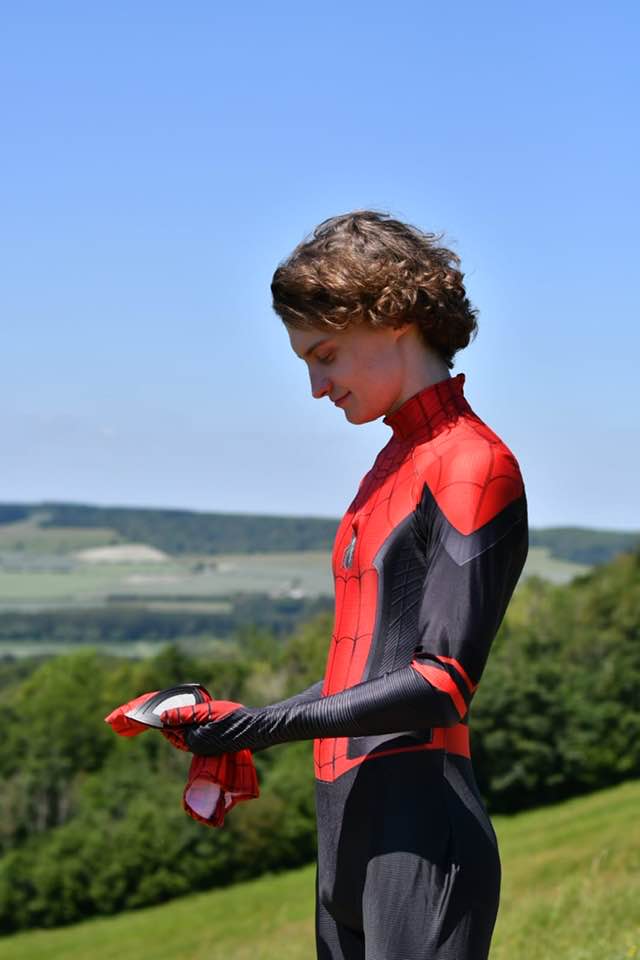
I love Spider-Man. As if the picture isn’t enough to scream that, I’ve loved Spider-Man as long as I can remember. I remember the despair I felt when I was 8 years old and lost my Spider-man 2 Doctor Octopus figure at school. I remember climbing up trees around my village and posing like the Web slinger. I remember the excitement I felt first seeing Tom Holland as the MCU’s Spider-Man in the Captain America: Civil War trailer. Peter Parker has always been a big part of my life, but as I grew into late adolescence I was no longer buying Doc Ock figures or climbing up trees. Then when I was 21 I played Insomniac’s Spider-Man for the PlayStation 4. And my god. It reminded me why I love Spider-Man.

Marvel’s Spider-Man PS4 is a 2018 action-adventure video game made by Insomniac games. It lets you play as the web slinger in a fully explorable New York City sprinkled with plenty of crimes to stop and references to the wider Marvel universe. The game has a full original story just like the movies, but with the expansiveness and emotional depth as many of the comics. Personally, I don’t think you could beat the idea of an open-world Spider-Man game where you can live out your wildest web slinging dreams. The combination of John Paesano’s phenomenal musical score and Insomniac’s gorgeous recreation of the New York skyline makes you feel like Spider-Man.

*Spoilers ahead for the main story of Spider-Man PS4*

From the very first scene of the game my love for Spider-Man began tingling. It opens with a spider dangling over Peter Parker’s window, and then pans to all the newspaper headlines pinned up of all the villains Spidey has put away. As Peter is alerted to Wilson Fisk (aka the Kingpin) causing a major problem for the NYPD, he puts on the iconic suit and looks down at the phone alert, and then looks at a slip for overdue rent. He looks back and forth again, and then leaps out the window and spreads his webs. That decision right there is what epitomises Peter Parker and why Spider-Man is such a global phenomenon. He has to make a choice, go after Fisk or pay the rent; what is right or personal responsibility. And this is within the first 5 minutes of the game.

I don’t think I’ve played a video game which I’ve been more emotionally invested in than Spider-Man. The characters are written as good as if not better than the films. Peter Parker is an older, more experienced Spider-Man in this story, so he’s faced with the pressures of adulthood whilst also balancing the vigilante lifestyle. His relationship with Otto Octavius is so well written that die-hard Spider-Man fans don’t want him to become Doctor Octopus. Otto and Peter have a shared passion for science and have an incredible rapport, so much so that Peter idolises him. So much so that by the end of the game when Octavius has become Doc Ock you almost dread Peter’s final showdown with him; a friendship thrown away for the sake of vengeance and arrogance.

Peter Parker’s love interest, Mary Jane (or MJ), is probably the best portrayal of MJ in any film or other media. Unlike the films, MJ is clearly no damsel in distress who needs Spidey to rescue her every 5 minutes. Being a journalist with an eye for a shifty story, she goes out by herself to investigate any villainous schemes that may be posing a threat to the city, even if it means putting herself in harm’s way. Throughout the game she has a slightly ambiguous yet stable relationship with Peter, balancing the thin line between casual friendship and deep romantic interest. She is much more than the cliché love interest for the hero. Peter and MJ are crime fighting partners; MJ using her journalism skills to do the right thing even if Peter disagrees with it. Miles Morales is another character worthy of an honourable mention. For those who are unfamiliar, Peter acts as a mentor figure to Miles and as die-hard fans know he eventually becomes the next Spider-Man. Miles goes through similar trauma to Peter; he loses loved ones, he faces potentially losing his city but he still carries on and does the right thing. There’s one brilliant scene where Spider-Man shows Miles how to throw a punch, which is later paid off in a scene where Miles punches an escaped convict for stealing some medical supplies. And this is all before he gets bitten by a spider and gains his own spidey powers.

These characters mean a lot to so many people because they are us. Peter doesn’t have a perfect relationship with MJ, Miles doesn’t have superpowers yet he helps out at a homeless shelter after losing his father. The relatability of these characters and the trials and tribulations they’re tested through is what inspires us to be better than we are. We may not have superpowers or a cool costume but these characters make us believe that we don’t need them to do just as much good. Spider-Man gets beaten down again and again, he has to take down the closest thing he’s had to a father figure. He has to make the ultimate sacrifice by choosing whether to save the city or save a loved one. Despite all this, he keeps going. He keeps being Spider-Man and he keeps doing the right thing. The emotional depth to this game is unparalleled to any other Spider-Man film or TV show. This game is the reason I went out and bought a Spider-Man costume. It made me want to read every comic book and watch every movie, and it made me so happy Marvel blessed us with this wonderful character. If you asked me who the greatest fictional hero of all time was, it wouldn’t be Superman, Batman, King Arthur, or Captain America. It would be Spider-Man. Because he’s one of us.

Photo by Jacob Mccormack