
Starting this blog off strong, I recently took a trip to London by myself. I decided to go on a whim as it was my day off of work and I didn’t want …
London Through My Lens

Just your average 26-year-old with a passion for anything put onto the big screen, small screen, stage, or on the pages of a book.
Starting this blog off strong, I recently took a trip to London by myself. I decided to go on a whim as it was my day off of work and I didn’t want …
London Through My Lens
As the great John Carpenter once said, horror is a universal language. We are all born afraid. Fear can be attributed to a lot of every day actions. We get to work on time in fear of being late. We attend social events in fear of missing out. Even those who have supposedly mastered fear still feel afraid. Batman fights criminals in fear of letting down the memory of his parents and his city. But what is it that people generally fear the most? What is it that keeps us up at night looking at that dark corner of our bedrooms? The unknown.
No one understands this better than writer/director Kyle Edward Ball, with his recent experimental horror film Skiramarink (2022). The premise of this film is quite simple; two children wake up one night to find their father is missing and various objects around the house are mysteriously disappearing. Ball’s focus however is not on delivering a tightly cohesive story with developed characters. Instead, he creates a creepy atmosphere relying mainly on ambient sounds and images. Ball has a Youtube channel on which he makes commenters’ nightmares into short films, as well as uploading his 2020 short film Heck, as a proof of concept for Skinamarink. Through these short films Ball clearly pioneered his minimal directional style; using grainy found-footage style camera work, mysterious ambient background noises, and minimal use of dialogue or physical appearance of characters. Effectively, this outputs a ‘running up the stairs after switching the light off’ type feeling.
For general audiences, Skinamarink can best be described as a combination of Paranormal Activity (2007), The Blair Witch Project (1999) and Poltergeist (1982), though much more subtle. Skinamarink really breaks filmmaking down to its most basic components; a series of images and sounds, and maximises their effectiveness. Most of the film consists of dark, grainy shots of various rooms in the house, often from the perspective of the two kids. Superficially, that sounds exceedingly unappealing, but if you maintain an open mind and experience this film for what it is, it is unsettling unlike any other horror I’ve seen. There’s one scene where the dad tells one of the kids to look under the bed, and there’s nothing even there, but it provokes that child-like fear that everyone still feels into adulthood, creating an anxiety level which is through the roof. This film masterfully exposes childhood fears, as it deals with the removal of various sources of comfort we have as children. Throughout the film, old cartoons play on a TV to serve as a background comfort noise for the children, and various household objects (including doors, windows, and seemingly parents) disappear. This reminds us of the comfort we found in these things in childhood, and provokes the feelings of them being taken away with a lack of control. Of course, this film also frequently relies on that feeling of something lurking in the dark and lets our imagination run wild, but the most unsettling thing about this is the fact that whatever our imagination conjures up, it never comes. It keeps you in a perpetual state of tension and anxiety as you expect a jump scare to come to relieve the tension, but they often never do. I watched this film with a friend, and there was one shot of a corridor, and the slight outline of what we both agreed looked like a person, but the film never provides a clear answer, which is the most terrifying thing.
Enjoyment of a film can be defined as how effectively it stimulates our emotions. A good comedy will make us laugh, a good heartfelt drama will make us cry, and a good horror will make us afraid. Skinamarink proves a big budget with big scares isn’t a prerequisite to successful scares, effectively proving that over-relying on jump scares is an easy way to get an audience reaction. Nevertheless, I can understand why Skinamarink has polarised audiences, as it is very slow placed and spends a lot of time in the dark (literally). It would be perfect if it was a little bit shorter, and perhaps more concisely embedded its already skeletal story. As it stands, I hugely appreciate the different approach to the horror genre, as Kyle Edward Ball is clearly someone who has a love for the craft and understands what keeps people in suspense. It doesn’t spoon feed its audience with plot and predictable jumpscares, and relies heavily on the ‘feel, don’t think’ mentality. It is the type of film to inspire aspiring filmmakers (such as myself), as it shows all you need is a camera, a house, effective lighting, and good editing skills to create an effectively creepy film. If anything, Skinamarink demands multiple watches to piece together its story and fully appreciate the substance behind the tension.
Netflix’s golden goose franchise, Stranger Things, has a new chapter. Set over 20 years before the start of the series, it is effectively an ‘origin story’ for Henry Creel, and what sets him on his journey to become the series’ big bad, Vecna. Henry’s time at Hawkins High School overlaps with that of some familiar faces, featuring a young Joyce, Hopper, Bob and several others which have various relations to the characters in the series. Get ready for more mysterious powers, loveable characters, shady government officials in an all-new setting, and the best part? It’s live on stage.
The First Shadow follows an original story written by series creators; The Duffer brothers, regular series writer Kate Trefry, and the legendary theatre writer behind Harry Potter and the Cursed Child, Jack Thorne. Within the first 5 minutes, you feel as if you’re watching an episode of the TV series. A fantastic flashback sequence which utilises almost every aspect of on-stage special effects instantly epitomises the tension and mystery which is undoubtedly, Stranger Things. This was swiftly followed by a rapturous applause as a projection of the title sequence from the series was displayed onto the safety screen. Each of the acts even has their own chapter names, just as each episode of the series does.
As previously mentioned, the play centres around young Henry Creel, but also manages to juggle younger versions of the characters from the series and new characters we’ve never seen before. As an avid Stranger Things fan, the first thing that struck me was how spot on the casting was for the younger versions of the original characters. In particular, Christopher Buckley (Bob Newby), Isabella Pappas (Joyce Maldonado) and Oscar Lloyd (James Hopper Jr). Not only does it look like the theatre company created a Time Machine and brought young Sean Astin, Winona Ryder and David Harbour (who respectively play the latter characters in the series), but the performances are convincingly in-character too. Christopher Buckley is delightfully likeable as young Bob Newby, aptly earning is later nickname as ‘the brain’. Meanwhile, Isabella Pappas brings the hot tempered nature to a young Joyce as she deals with directing a school play and her frolicking with James Hopper Jr. As for Hopper Jr, Oscar Lloyd brings what I regard as ‘Steve Harrington’ energy to a young Jim Hopper. The guy has a keen eye to get to the bottom of a mystery which his father, Chief James Hopper Sr (Shane Attwooll) is neglecting. Lloyd and Pappas both give hints of the boisterousness of their older counterparts, whilst providing the vulnerable moments when needed. As for other characters from the series, we get a glimpse of younger versions of the parents of our fan favourites. This includes a young Ted Wheeler and Karen Childress, playfully portrayed by Gilles Geary and Florence Guy respectively. For the first time in the series’ history, we are even shown the fathers to Dustin and Eddie; Walter Henderson (Calum Ross) and Alan Munson (Max Harwood), who provide the goofiness they will later pass down to their children in the show, whilst also providing a unique take on new characters.
The real star of the show (literally) is Louis McCartney as a teenaged Henry Creel, in what is his professional West End debut. Not only does McCartney convincingly provide the makings of a sociopathic antagonist, he also provides substantial vulnerability to a character who is a teenaged boy attempting to navigate high school in the 1950s. Henry Creel is a heavily introverted outcast, spending most of his time testing his mysterious psychic abilities in his family’s attic. In addition, he befriends newcomer to the Stranger Things universe, Patty Newby (Ella Karuna Williams), Bob’s adoptive sister. The chemistry between Creel and Newby is a highlight of the show, with Newby allowing Creel’s more human side to show, giving us not only a new perspective on a recurring character, but also warming us to a exceedingly likeable newcomer.
I have no doubt I could write many more words describing the play from the perspective of a Stranger Things fan, but from a newcomer’s perspective, it might be different. Most of the people who go to see this play will undoubtedly have watched the series, but if you are one of the few who hasn’t, then I would still highly recommend it. It is a marvel in on-stage special effects, arranging multiple scenes and juggling multiple characters in a way which doesn’t feel cluttered, and a sympathetic story of teenagers trying to navigate the pressures of a changing world. All meticulously put together by accomplished theatre director Stephen Daldry, and his fantastic team of set designers, choreographers, and producers. The best way I can describe Stranger Things: The First Shadow to both fans of the series and newcomers is this: It is the new Harry Potter and the Cursed Child of theatre. An exceptional addition to an already exceptional world, giving a brand new perspective on the world and it’s characters, whilst also being a fantastic testament to the work of theatre production. Being the earliest story told in the series’ timeline, perhaps for newcomers it will even make a remarkable introduction to the Stranger Things universe…

Nowadays, when you’re debating what films to stick on to get in the mood for the spooky season, The Conjuring or one of its many spin-offs will likely be amongst the first suggested. The 2013 film, directed by the horror mastermind behind the Saw and Insidious franchises James Wan, was given an R-rating by the Motion Picture Association of America because it was ‘simply too scary’. The film was also an undeniable box office success, raking in $319 million at the box office on a $20 million budget. It was only a year later that the first spin-off, Annabelle (2014), centred around the possessed doll featured in The Conjuring, was released. In the 10 years since the release of the first film, The Conjuring universe seemingly dominated the horror box office, grossing over $2.2 billion combined, and consequently becoming the highest grossing horror franchise. Now, these facts and figures are all well and good, but are the films actually any good? And what’s the point of having all these films? Are they all leading to some horror-esque Avengers: Endgame style finale?
As previously mentioned, the first Conjuring movie is widely regarded as a staple of modern horror. Not only does it harken back to classic haunted house movies like 1963’s The Haunting and 1982’s Poltergeist, but it provides a unique angle on the haunted house trope. The movie is based on the real-life case of the Perron family, who move into a farmhouse in Rhode Island and begin experiencing demonic activity, and consequently contacted paranormal investigators Ed and Lorraine Warren. Many, including myself, regard The Conjuring as a cookie-cutter supernatural horror film. The kind of horror film that makes you check under the bed and make you paranoid about getting up in the night. It stands out from other horror films for its familial angle, creative scares, and setting, since all of the Conjuring movies are period pieces set between the mid 1950s and early 1980s. The success of the first film generated a sequel, The Conjuring 2 (2016) and a spin-off Annabelle (2014), which in turn spawned two Annabelle sequels, and two spin-offs about the demonic nun seen in The Conjuring 2. The first two Conjuring films are generally regarded as the best of the franchise, whilst their sequels and spin-offs have received mixed to negative reception. Many regard the latter as cheap imitations of the original Conjuring films which rely on jump scares and have little to no narrative or interesting characters.
Having watched all these films myself, I can attest to the fact the franchise is a mixed bag of quality. Whilst they certainly do their job at occasionally scaring me and at the very least unsettling me, it is undeniable that they are effectively cash-ins on the franchise. But is this the sole reason for them sharing the same universe? Each film does attempt to narratively connect to one of the first two Conjuring films, with the Annabelle films showing how the allegedly possessed doll ended up in the possession of the Warrens, and the Nun films seemingly building up to the personal connection between the demonic Nun and Lorraine Warren. Whilst these connections do provide some interesting background and context to the Conjuring films, their wavering quality and originality puts into question whether they were necessary editions to the overarching story. Surely, the origin of the Annabelle doll and the nun could have been concisely explained in a single film each, and not panned out across multiple films? Both are exceptionally creepy horror villains, which makes their lack of story and scare originality of their own films feel like wasted potential. Granted, the Annabelle sequels were received better than the original, as did the recent The Nun II receive better reception than the first film. It seems almost as if Warner Bros were desperate to generate good spin-offs to the Conjuring films. It seems however that The Conjuring franchise has suffered the fate of many of Hollywood’s most well-known horror franchises; sequels upon sequels attempting to recapture the spark of the original. This however leads to my main point; do we need all of these films, or does the franchise need to end?
Personally, I believe the Conjuring franchise needs to end, or take a new direction. I most recently watched the third Annabelle sequel, Annabelle Comes Home (2019), which is the first in the franchise to be set at the Warren’s house. Whilst there was some really creative filmmaking going on in the film, there isn’t much of a story and as such it does feel written solely for the purpose of another cash-in on the franchise. The film revolves around the Annabelle doll controlling various entities originating from the artefacts in the Warren’s special designated room. A bride, a samurai, a ferryman, and a big black dog allegedly from Essex show up in this film to contribute to the scares. What are their stories? How did they end up in the Warren’s artefact room? This suggests to me there is potential to explore each of the Warren’s cases based around these entities. After all, most of the films are based on the Warren’s real life case files; creator James Wan even stating he originally intended the series to be called ‘The Warren Files’. There was even a cancelled spin-off about ‘The Crooked Man’, a demonic entity who appeared in The Conjuring 2, and is based on the 19th century nursery rhyme ‘There was a Crooked Man’. Nevertheless, it seems Warner Bros would rather churn out sequels about the same horror villains with the same generic stories rather than exploring these new stories. I believe making films about different entities which all end up in the Warren’s case files would substantially benefit the franchise. They would reinvigorate it with some much needed originality, unique stories and settings, and connect the universe together in a coherent way. Otherwise, the waining originality and quality of the Conjuring films may be an indication it’s time to lock the franchise away in a box and give other horror films a shot in the limelight. I like to think I’m quite optimistic about films, but when a franchise has produced a mixed bag of releases quality-wise, it makes it difficult. Given time, I would be impartial to seeing a Freddy vs Jason-style showdown between the Nun and Annabelle, but I can only hope.
As a shameless ‘film bro’ and an avid horror fan, I felt like it was my duty to experience the work of a man who is often regarded as one of the greatest filmmakers in history. I’m referring to, of course, the ‘master of suspense’ Alfred Hitchcock. I got hold of a boxset of four of his most highly regarded films; Rear Window (1954), Vertigo (1958), Psycho (1960), and The Birds (1963). I watched them over the course of a week with my dad in release order, and, since it was Hitchcock, I thought I would do what I do best with movies – get all my thoughts out on this blog. What did I think? Did I enjoy them? Do they still hold up 60+ years later? Do I finally understand why Hitchcock is regarded as one of the greatest filmmakers and as the ‘master of suspense’? Read on and I will leave you in suspense no more…
First up was Hitchcock’s 1954 murder mystery Rear Window. It follows photographer L.B. ‘Jeff’ Jeffries (James Stewart) as he is confined to his apartment by a broken leg, with nothing better to do than spy on the neighbours across his Greenwich village courtyard. His spying takes a turn when he begins to suspect one of the neighbours has murdered his wife, and so Jeff enlists the help of his girlfriend Lisa (Grace Kelly) and nurse Stella (Thelma Ritter) to solve the mystery. What impressed me about this film was that the story unfolded almost entirely through Jeff’s apartment window through the perspective of his binoculars. What made this even more impressive was the detail that was put into constructing the elaborate set for the courtyard. It took six weeks to build, complete with lighting to accommodate both day and night sequences, and even included a drainage system for one rain sequence in the film. It was apparently the largest set built at Paramount studios at the time. It has a slow start, as the film is set in the same apartment, with the same shots, centred around the same three characters, yet it somehow still immerses the viewer in the narrative. The film confines you to Jeff’s wheelchair as he attempts to solve the murder mystery which makes it all the more gripping, and the last 20 minutes especially tense. There are certain shots in this film that are haunting and will remain with me for a long time.
Next was Vertigo, which if made today, would almost certainly be directed by Christopher Nolan. It is arguably Hitchcock’s most technically ambitious film, as it uses some unconventional special effects and is the first film to use the dolly zoom (when a camera zooms into a subject whilst physically moving away, distorting the background). The film follows former detective John ‘Scottie’ Ferguson (James Stewart once again) who has been hired as a personal investigator by Gavin Elster (Tom Helmore) to follow Elster’s wife Madeleine (Kim Novak). The elaborate plot of the film hinges on Scottie’s extreme fear of heights that stemmed from a traumatic experience earlier in his career. Despite the name, it doesn’t portray the condition of vertigo, but the dolly zoom is used to good effect to represent Scottie’s fear of heights. The plot is interestingly constructed, and the way Scottie’s fear is portrayed and weaved in throughout is very Nolan-esque. There’s some exceptional camera work which sells Scottie’s condition, and there’s one particular dream sequence which is the pinnacle of 1950s movie effects, and appears rather out of pocket compared to the rest of the film. My main issue with this film is that it is the archetype slow burner. Granted, it’s of the time, but the pace remains the same up until the last 20 minutes. At which point there is a significant plot twist which somewhat pays off the rest of the film, but generally the pacing is something you’ll have to bear with to appreciate the film fully. Still, there’s some tense moments and I can understand why it receives the praise it does. I always find it hilarious how terribly awkward love making scenes are in old movies. The actors look as if they have been given strict direction to underplay the passion.
Next was not only Hitchcock’s most iconic film, but one of the most iconic films of all time. What can I say about 1960’s Psycho that hasn’t already been said? It stars Vera Miles as Marion Crane who ends up at the notorious Bates Motel, where manager Norman Bates (Anthony Perkins) seemingly cares for his housebound mother. What follows reset the genre for horror, suspense, and even gore. This was the slasher before slashers, simply because it’s more suspense than actual slashing. I have no doubt the gore in this film back then was the equivalent to Saw now. The difference is, the violence in this film hits harder not because of the violence itself, but the care that Hitchcock put into creating a suspenseful build up. The reason this film is so timeless is because of how simple yet effective horror filmmaking is. Something as simple as a slow camera pan or a musical cue can create gripping tension when well executed. Bernard Herrmann’s iconic score is perfectly chilling, and provided the cookie cutter for horror movie and suspenseful scores to come. Anthony Perkins was exceptional as Norman Bates, from his awkward mannerisms and stutter to that psychotic stare at the end. His performance is like something you’d see in a film today, which is exactly why it still holds up. Granted, this film has its slow and duller moments and some of the dialogue is rather stilted but it’s not enough to break up the experience. This film also has one of the most memorable and chilling ends to a film I’ve ever seen…that smile.
Finally came 1963’s The Birds. Having only just watched Psycho a few days prior, I couldn’t help but think it was more than a coincidence that Norman Bates had a fascination with taxidermy birds prior to Hitchcock making a film called ‘The Birds’. The Birds stars Tippi Hedren as socialite Melanie Daniels who meets lawyer Mitch Brenner (Rod Taylor). Tippi is apparently so infatuated by Mitch that she follows him to his hometown of Bodega Bay with some lovebirds in tow. What follows is an avian onslaught; hundreds of birds begin attacking the people of the sleepy coastal town. Apparently, Hitchcock told the writer to develop the characters and a more elaborate story whilst keeping the concept of the original short story it is based on. It really shows. The first half of this film is about an unconvincing romance which makes Melanie’s actions the first 10 minutes rather toe-curling. Meanwhile the ominous presence of the birds is drip fed throughout, until about halfway through when the real bird attacks go up a gear. The concept of birds being a threat to humans is an interesting one. Birds are everywhere and there’s nothing we could do to stop them relentlessly attacking us in droves. It’s classic Hitchcock to turn these creatures which we live alongside and take for granted into a demonic and malevolent presence, all without a musical score too. Given the time of release, I imagine the special effects were also exceptionally impressive. I understand the characters are meant to be self-indulgent in their own ways to justify them being attacked by birds, but most of the dialogue I found quite unconvincing and one-dimensional. The film suggested the lovebirds were a plot device which would connect to the bird attacks, but surprisingly no such connection was outright made. Perhaps this was left intentionally ambiguous and merely implied by Hitchcock, but as such, I wasn’t entirely sure whether to take this film seriously. Nonetheless, from a technological and horror standpoint I can see why this film broke new ground and I can appreciate it for that.
I would describe watching some of Hitchcock’s highlights as enjoyable, but also educational. It was interesting to see from where much of the horror and suspense of today’s cinema is derived, and to watch some of the staples of classic cinema from a transitional time between old and new Hollywood in the 1950s-60s. My dad and I also watched the 2014 biopic Hitchcock, which tells the story of Hitchcock’s relationship with his wife Alma Reville whilst filming Psycho. The film was enjoyable, mainly due to the performances of Anthony Hopkins and Helen Mirren. However, as the film covered a a long period of Hitchcock’s career, it only really focuses on the key events. It felt rather like a service film for Hitchcock fans, which detracted from the depth it could have had, especially during the making of Psycho itself. Nonetheless, the portrayal of Hitchcock’s awkward relationship with his wife is fascinating, as are the general nods to Psycho. Hitchcock’s films are the reason cinema is timeless. As I’ve mentioned in previous reviews of historical films, it’s always rewarding to see how great writing, acting, and filmmaking holds up after over six decades. This provided further evidence that time is irrelevant to film quality. To me, watching films from over six decades ago isn’t just a source of escapism into the stories themselves; it is also intriguing how they reflect the times at which they were made. It’s inspirational to see how far cinema has come, and the impression that that ambitious Englishman from East London made on movies.
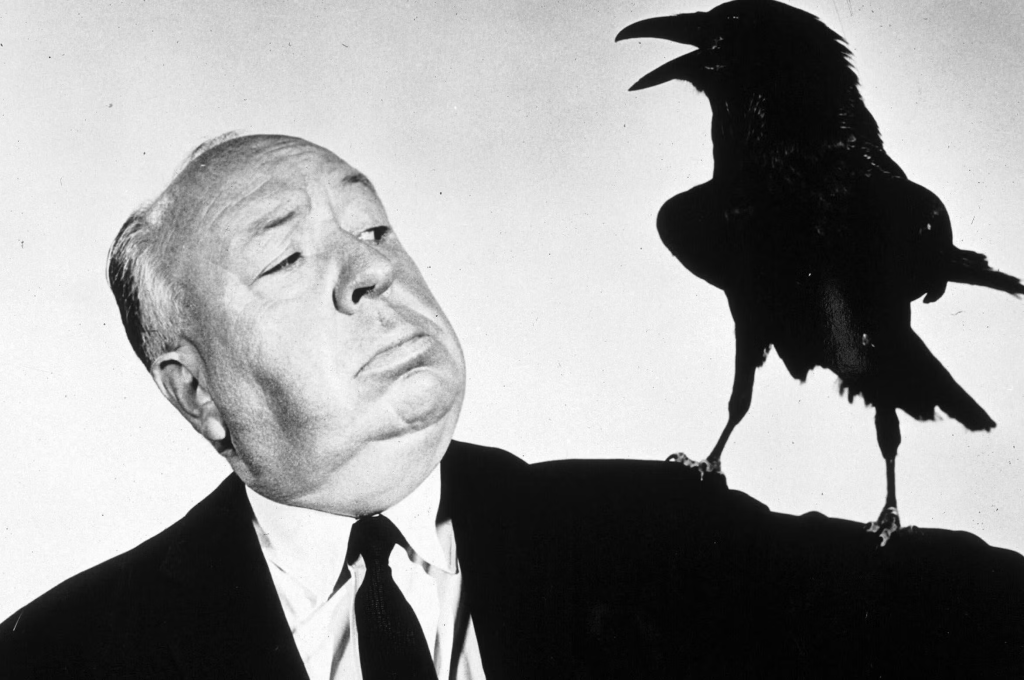
Image courtesy of The Independent
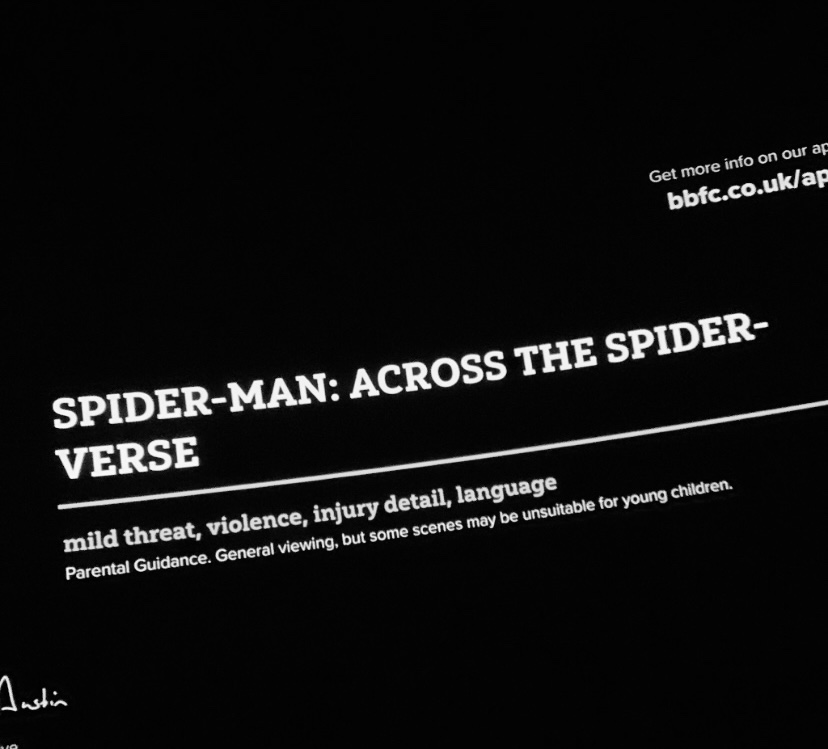
If there’s one thing that aggravates me, it’s when I hear people say, ‘I don’t fancy watching that one Spider-Man film because it’s animated’. If you’re so quick to rule out animation as an accessible means of visual storytelling, then just let an unapologetic 24-year old Spider-Man fan tell you about Sony’s Spider-Verse films. Not only did 2018’s Into the Spider-Verse garner acclaim from critics and fans alike, but was also a uniquely innovative cinematic experience with its visual prowess, grounded storytelling, and emotional weight. What made it so unique was how it used visual effects to tell the story and capture the emotions of the characters in a way no other animated film has. Not to mention it was another relatable Spider-man story about Marvel’s underdog Miles Morales which made it all the more appealing. Imagine this, but somehow improved on every level. That is Spider-Man: Across the Spider-Verse.
Across the Spider-Verse continues the story of Miles Morales, New York’s biracial Spider-Man after he takes up the mantel in the first film. It also continues the story of Gwen Stacy, known in her own world (aptly named Earth-65; Miles’ home is Earth-1610) as Spider-Woman. Both are earnestly voiced Shameik Moore and Hailee Steinfield respectively, reprising their roles from the first film. The two Spider-kids deal with parental conflicts, a poignant theme which was touched upon in the first film, but more thoughtfully explored in its sequel. Meanwhile, a multi-versal threat emerges forcing both of them to travel across the multiverse and encounter a delightful plethora of other Spider-people in a ‘Spider Society’. This society is led by Spider-Man 2099, a futuristic Spider-Man menacingly voiced by Oscar Isaac who, in the best way possible, described the character as ‘the only unfunny Spider-Man’. Considering many cinema-goers are claiming ‘superhero fatigue’ is setting in, believing the repetitiveness of the superhero genre is desensitising its enjoyment, Across the Spider-Verse proves that this is not the case. Even though the themes of heroism and responsibility are synonymous with every Spider-man story, this film takes a new approach, and challenges the archetypal story which is supposedly destined into the lives of the people who become heroes.
The multiverse is an increasingly common theme in movies, not just in the Marvel Cinematic Universe (referred to in Spider-Verse as Earth-199999, Tom Holland Spider-Man’s home) but in other films. The idea that there is an infinite number of other universes to our own gives fantastical weight to the themes of destiny and consequences. Is everything supposed to play out according to a big plan? Or does everything run in chaotic autonomy? Last year’s multi-award winning film Everything Everywhere All at Once showed the chaos and unpredictability of the multiverse can be harnessed to create a compelling and innovative story, with crazy ideas that have a purpose. Across the Spider-Verse‘s spider-themed approach to the multiverse arguably does it just as well, and perhaps more concisely to appeal to a wider audience. It not only gives Spider-man fans an astounding abundance of easter eggs to alternate Spider-people and references to other media, but it gives the film a lively feeling of character and provides emotional weight to character’s choices. Given all this, it doesn’t once feel over crowded to my pleasant surprise.
To say Across the Spider-Verse is one of the best-looking films of the year so far would be an understatement. It is one of the best-looking films in recent years. The film embraces a vibrant range of drawing styles to illustrate its different universes and its character’s emotions. For example, newcomer Spider-Punk (fantastically voiced in Daniel Kaluuya’s London accent) is animated with a combination of punk-rock cutouts, reflecting his rebellious nature from a world ruled by a totalitarian regime. Meanwhile, Gwen’s world is illustrated with warm blue and white palettes which look like wide but delicate paint strokes. Not only is this aesthetically pleasing, but also reflects Gwen’s emotional state. When having difficult conversations with her police captain father George Stacy, the colours of the background change depending on whether Gwen feels sad, angry, or scared. It is done with such grace that it illustrates the characters’ depth without the need for extensive dialogue or story beats. Even Daniel Pemberton’s exceptional score provides a unique musical theme for each of the key players in the film. Spider-Woman’s light and energetic theme reflecting her grace and femininity, whilst guitar, vocals and drums vigorously put the ‘punk’ in Spider-Punk. There is one scene in particular featuring Miles and Gwen sitting upside down on a building that I was truly in awe of watching on a huge IMAX screen. No web slinging, no crime fighting, just two Spider-pals hanging out. Beautiful.
When writing a review of something, it’s all well and good coming up with colourful adjectives to describe it, but it isn’t quite the same as describing exactly how something made you feel. Watching Across the Spider-Verse was like going to a theme park. Each of the rides are different enough that they all unique and provide their own sense of enjoyment. Some are solely there to be visually appealing, but others are an exhilarating and emotional rollercoaster which leave you wanting more when you get off. In this theme park however, all the rides have one thing in common – they’re spider themed. Across the Spider-Verse to Spider-Man is effectively what the Empire Strikes Back was for Star Wars; improving upon the original in every aspect. Thoughtfully expanding on the story beats which made the original so good, providing the story with higher stakes. Expanding the universe (quite literally) which allows for a colourful vibrancy of animation rarely seen in film. Across the Spider-Verse is superhero escapism at its best, divulging into a plethora of creative ideas and fleshing out the lore of one of the most beloved fictional characters of all time.
What defines a movie about movies? They remind us of the beauty of film, the appeal of the cinematic world, and the reason we go to see them on a big screen. A lot of movies reference movie-making in some way, but that doesn’t mean they are about movies. For example, King Kong is about a group of explorers who travel to Skull Island to document its inhabitants on film, but that isn’t what the film is about. The film is about adventure into the unknown, and the misunderstood creature that is Kong. I wouldn’t even describe a film like La La Land as a movie about movies. Whilst it is set in Hollywood and one of its main characters is an aspiring actress, it is not about filmmaking specifically.
Movies about movies weave films and filmmaking into their central themes. They remind audiences of the joy of going to the cinema, and the complexity of the filmmaking process itself. A quintessential example of this is Sam Mendes’s recent film, Empire of Light. Centred around a cinema set in Margate, it follows cinema workers Hilary (Olivia Colman) and Stephen (Micheal Ward) navigating the turbulent times of 1980s England as romance blossoms between them. The film integrates themes of racism, mental health and class, but to its core, it is about how film can bring people together. As Stephen so eloquently puts it to Hilary in one scene; ‘That beam of light, it’s an escape.’ Sam Mendes has himself stated it is based on his early experiences of going to the cinema, and many have regarded the film as his ‘love letter’ to cinema. Other quintessential examples of movies about movies are La La Land director Damien Chazelle’s Babylon, and Stephen Spielberg’s semi-autobiographical film The Fabelmans, both of which have hit UK cinemas in the past few months. Babylon is an outrageous, lavish, 3-hour picture about the transition of silent to sound films in the late 1920s. It stars Margot Robbie as aspiring actress Nellie LaRoy, Brad Pitt as declining actor Jack Conrad, and Diego Calva as Manny Torres – an up-coming filmmaker and Nellie’s love interest. The core of the film is about these characters navigating the 1920s-film scene, depicted through various sequences of film productions and showing how hilariously gruelling they could be. The ending encapsulates how far cinema has come, as Manny sits in a cinema in the early 1950s and reflects upon his life and how much of an impact film has had on it. Spielberg’s The Fabelmans, however, is quite the opposite of Babylon. It is a tender, heart-warming, coming-of-age story of aspiring filmmaker Sammy Fabelman and how films provide the vehicle for him to navigate his dysfunctional family life. Not only did the film garner critical acclaim, but was also nominated for over 100 awards, and won 23. What these films all have in common is (1) they were all released in UK cinemas in 2023; and (2) they illustrate how films play an integral role in the development and story of the lead characters.
This trend even extends to previous years, with films like 2022’s The Unbearable Weight of Massive Talent and 2021’s Belfast reminding its audiences of the joy of filmmaking and going to the cinema. Unbearable Weight is effectively Nicholas Cage’s hilariously self-aware tribute to cinema, as he plays a fictionalised version of himself and pokes fun at his own career. Belfast meanwhile was Kenneth Branagh’s sleeper hit about a boy brought up during the political turmoil of Northern Ireland in 1969. As with Empire of Light and The Fabelmans, the film revolves around its central character navigating troubling times with a love for films presented as a hopeful escape. Even Ti West’s recent 2022 horrors X and Pearl, both starring Mia Goth, can be regarded as tributes to early and late 20th century cinema and what made it so special.
Whilst there have always been movies about movies, there has rarely been so many within a short space of time. In the past, movies with movies woven so centrally into their plots have come much more infrequently, with releases like The Player (1992), Adaption (2002), The Artist (2011), and The Disaster Artist (2017) only appearing every few years. Considering the movies previously discussed have been released in 2022 and 2023, it is reasonable to assume it has partly been due to filmmakers getting back on track in a post-COVID world. Considering the detrimental impact the pandemic had on filmmaking and cinemas, perhaps filmmakers are choosing to remind people how valuable the cinematic experience is, causing a ‘bump’ in releases of movies about movies. Many filmmakers have even commented on this. British director Philippa Lowthorpe once stated how saddened she was that the performance of her film Misbehaviour (2020) was affected by the pandemic. Combined with the rise of streaming, people are seemingly less inclined to travel to cinemas. A 2020 survey by Variety even found 70% of people would rather watch movies at home than go to the cinema. So, perhaps filmmakers are attempting to remind audiences through the craft of visual storytelling that watching a film in the cinema is one of the most encapsulating experiences you can have. Even Tarantino has recently announced that he has completed the script for his next and final film, The Movie Critic, which will be set in the 1970s and centred around movie critic Pauline Kael. It would be interesting to discuss with mainstream directors such as Tarantino and Spielberg whether their mind-sets have been influenced by the effect the pandemic and streaming has had on cinemas. For now though, as an avid movie-goer, I couldn’t be happier about filmmakers choosing to produce more movies about movies. Hopefully, reminding people of the magic of the silver screen and the whole cinematic experience will have audiences returning to cinemas.
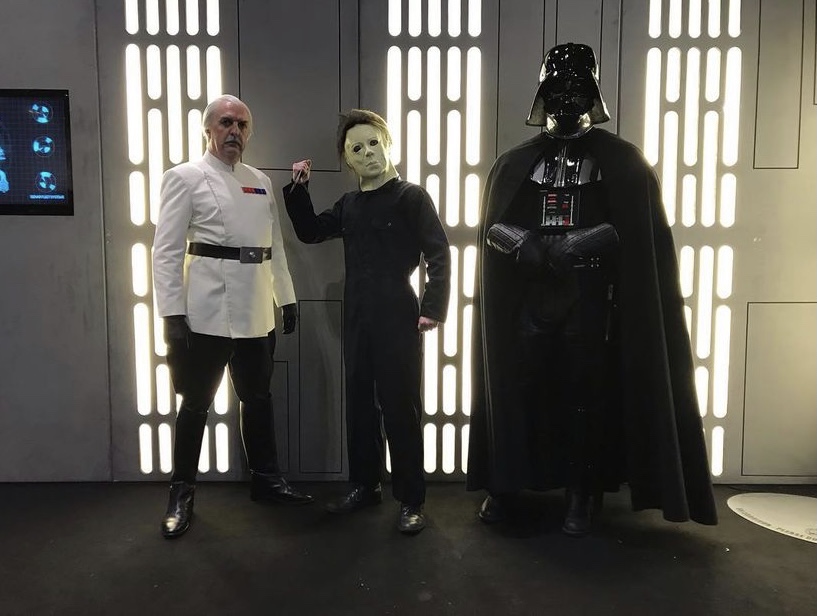

Are ghosts real? This is the question on which playwright Danny Robins’s 2:22 Ghost Story hinges. In the spirit (no pun intended) of the holiday season, I went to see the play at the Criterion Theatre in London’s West End. The play incited many scary and humorous moments, and questions about the existence of the paranormal. The latter is what the 2:22‘s appeal hinges on; in a modern day world surrounded by technology and reliance on scientific explanation, why do we still cling on to beliefs about the paranormal? Are we simply fascinated by the unexplained? 2:22 tells an effective story about how a contemporary household deals with these questions.
2:22 is about two couples; Jenny and Sam who have recently bought a house which they are renovating, and Lauren and Ben, who have been invited to their house for a dinner party. Jenny is convinced the house is haunted, so she gets the party to stay up to 2:22.a.m. to see what transpires. I appreciated the realism of the characters and setting, the cast members are your typical 30-ish, suburban couples maintaining the weight of responsibility of adult life whilst still trying to enjoy themselves. Jenny (Laura Whitmore) is effectively the heart of the play. She is the one taking the paranormal activity the most seriously, especially since she is the mother of a sleeping baby in the room above. Her husband Sam (Felix Scott) however is the opposite of Jenny in many ways, he’s the least open-minded of all of them, sceptical about the paranormal and is always clinging to rational explanations. Tamsin Carroll was exceptionally entertaining as Lauren. Uncertain on where she stands regarding the paranormal, she drinks too much to hide her insecurities. Lauren’s boyfriend Ben (Nigel Allen) was a good contrast to Lauren; a man very sure of himself yet fairly open-minded when it comes to the inexplicable. The cast all had good chemistry, which created a good balance between quippy banter and serious, somber moments. It’s a shame some of their characters weren’t explored more, but then you can only fit so much in a two-hour play centred around one evening in one room.
Huge props (again, no pun intended) must be handed to the production team. The kitchen-diner set felt like somewhere you could actually live, making all the tense paranormal goings-on hit closer to home. From the Monopoly board on the coffee table, to the half-painted walls, it feels like a real living space that matched the characters’ personalities. Set designer Anna Fleischle stated she wanted the set to show the transition between the old and the new; the tension between the two and that the new effectively tears down the old in its place. This tension is not only reflected by the untidy walls and exposed bricks, but also between Jenny and Sam. As the one most concerned with what could be haunting their house from the past, Jenny values what’s left behind more than her husband Sam, who’s lack of sensibility and excessive rationality creates an intriguing conflict. The tensest moments in the play were those in which no word was spoken. Letting a revelation linger in the room for a few moments whilst a light flickers or a baby monitor flashes. Those are the moments which are the most unsettling, and whilst the play has its fair share of jump scares, they aren’t overly relied upon.
2:22 A Ghost Story excels in its exploration of the paranormal. It questions the plausibility of ghosts and if they exist, how would they? What would they do? What would their purpose be in a modern world? It unlocks that underlying fascination people have with the inexplicable. You spend two hours in the company of these two couples, eavesdropping on their alcohol-fuelled bickering. In doing so, it brings genuine tension between the characters, and uses an otherworldly subject matter to spark quarrels about their insecurities and feelings about each other. I think that’s the most unsettling thing about 2:22. It feels genuine, as if it could really happen. I have no doubt 2:22 would make a thrilling adaption as a short film, with some creative cinematography and sound design to recapture the tension seen on stage. We’ve all had the conversation with someone over whether ghosts are real. 2:22 shows how far that conversation could go if we’re given plausible evidence of the paranormal. Are ghosts simply a paradigm used to explain what science cannot? 2:22 heeds caution to the blind sceptic, and opens the mind as to whether ghosts are not simply a paradigm, but could really exist. As Danny Robins playfully puts it, ‘Perhaps the question is not “Do ghosts exist?”, but “Can we exist without ghosts?”


Simon Paisley Day is a local actor from Whitstable who has had roles in Sherlock, The Crown, Doctor Who, and even Star Wars. He also has had an extensive theatrical career, consisting mostly of Shakespeare, spanning from Measure for Measure to Macbeth. I got the opportunity to chat with him over zoom about film, TV, theatre, and tips for budding actors.
Gareth: Good morning Simon! It’s lovely to get the opportunity to chat with you. I understand the pandemic has presented many obstacles for filmmaking over the last two years. As an actor, how did the pandemic affect your career?
Simon: When they announced the first lockdown, I remember Susie, my wife, going ‘Oh my God, I really hope that’s not going to really mess you up’, and I always remained optimistic and thought, oh, things won’t affect me. I swiftly realised however that it would. Theatres were closed, TV productions were shut down and I wouldn’t be earning anything. Theatres especially took a lot longer to get back up and running, because you’re playing to a live audience. By the second lockdown, things were getting back on an even kneel. TV and film companies conducted regular testing and bubbled together their actors. So, if they were shooting a film, they’d make sure that everyone involved in the film was bubbled with each other for the duration of the shoot. Actors would have to say goodbye to their loved ones for a couple of months until the filming was over because they couldn’t risk cross infection. One job I had during the dark days of the first lockdown was at a Stately home in Yorkshire. My friend Jenna Russell, who just lives around the corner, was in it too, and we were playing husband and wife or something. We were going to be sitting next to each other at a dinner table in this stately home in Yorkshire, so I suggested sharing a taxi, but the production company wouldn’t have it to avoid cross infection. The taxi I got in was swaddled in plastic, and I could barely hear what the taxi driver was saying. So, we both drove all the way to Yorkshire separately, and then the next day we were sitting next to each other acting! Whenever the director wanted to come and speak to us, he’d put a mask on and he’d come across and he’d give us a couple of notes, and then he walked away and took his mask off. It was properly bizarre, but I understand why they needed to do it. When I got the big job of playing Dominic Cummings in the drama This England, we filmed in an aircraft hangar in Norfolk, and we were all staying in little cottages near the hangar. We all had to be bubbled away from our loved ones and just get on and work. So, the business found a route back to work which involved regular testing, and asking their actors to be not going to nightclubs and snogging anyone they don’t know, which clearly is difficult for actors!
Gareth: (Laughs) I can imagine. I remember in one offer I had to be an extra they said I had to go to Leavesden studios to do a COVID test, and then go all the way to Sussex for the filming!
Simon: I understand it, I mean, if a supporting artist comes on set with COVID and an actor playing my size of role gets it, they can’t film anything.
Gareth: You mentioned theatre earlier, how does film, TV and theatre compare? Do you have a preference?
Simon: The last theatre I did was a Yasmina Reza play called God of Carnage. It never made the West End because of COVID, so it had a short run, but I loved it. We rehearsed it for a month and then we played eight shows at five venues across the country. Sometimes, a tour will go for 20 weeks, or it’ll do a five-week tour like I did and go into the West End where it will play for minimum of 12 weeks to a year if it does well. I’m incredibly wary of those because I get bored of doing the same play repeatedly for so long. This is especially the case for me as I live in Whitstable so I need to commute in and out. So, I do love theatre, but I much prefer doing TV and film because you learn the lines, you do the scene a couple of times until you get it right and then you move on. You don’t get stuck doing the same thing over and over.
Having said that, I do miss audience reactions in the theatre. On a TV or film set, when the scene is over there’s no applause. No one comes to the stage door and goes, ‘Darling, you were marvellous!’ and many actors thrive on live audience. In film and TV, the most you’ll get is a director approaching you after a take and saying, ‘Good job!’ and moving on. Actors live for praise, and the applause you get after taking the audience on an emotional journey on stage for 2 hours gives you something to feel proud of.
Gareth: Speaking of theatre, you’ve done a lot of Shakespeare. How does Shakespearean acting compare to more contemporary acting?
Simon: It depends how well it’s rehearsed. If you don’t get sufficient rehearsal, you’re not directed well, or you’re not acting with the right people, it can be very tricky. But if all those things are right, then there’s nothing like it. It’s like learning a different language, but you need to speak as if it’s natural dialogue. I’ve said to countless drama students you need to figure out what your character is saying, and then say the line with the intention of the simplified idea in your head. So effectively, you’re saying the Shakespearean line with modern English intention, and hopefully it comes naturally.

Gareth: You frequently play quite authoritarian, military-type characters. Is that something that happened by chance or is it something that you always wanted to do?
Simon: Most actors end up getting typecast, and it can get repetitive. If you shuffle into an audition quite unconfidently, they might think that you would be good for a role which requires you to be unconfident. Likewise, if you walk into the room and you stand up tall and speak confidently then they’d probably think you’d be good as an authority figure. Quite early on it seemed to me I would get cast in authoritarian roles. I went to a public school for the last three years of my education, and I learned to speak posh. So, I’ve got used to playing lawyers and all sorts of military people. But because I’ve been typecast so much I’m itching to play something completely different like a criminal or low-life who isn’t very articulate. I keep telling my agent that if any of these sorts of roles become available send them my way!
It happens less in the theatre than on television, I think because theatre is a big dressing up box. For example, you could be doing a Shakespeare play and there’s a cast list of 28 characters, but they haven’t got 28 actors. So, they get a team of 10 actors and everyone has to play multiple roles. Within those plays I had the most fun I’ve ever had in the theatre. I was doing Shakespeare’s Measure for Measure around some American universities with four friends about 25 years ago. We had no costumes, really. We had no props. Just the language. Since there was only five of us, each of us played at least three roles. I remember I played Angelo, who’s the sort of corrupt power figure, and this geezer called Frog, who was always getting into trouble. Another was this pimp who was trying to get people for his prostitutes. Playing multiple roles in a play is the most fun in the world. Within one scene you’re flipping from one character to another with different posture and different voices. It’s shape shifting. Which is why we all go into it because we don’t want to be ourselves, we want to be someone else for a bit.
Gareth: That’s true, I’ve noticed actors tend to get a lot of praise for versatility. One authoritarian role you played was in Star Wars: The Rise of Skywalker; you played General Quinn in a scene where you get choked by Kylo Ren (Adam Driver). As an avid Star Wars fan, I must ask – what was it like being on set? Was that you being thrown in the air or was it a stunt double?
Simon: Well, it was a combination of me and a tall, skinny stunt guy. The stunt guy is who you see being thrown in the air, and they had to give him a bald cap so he looked more like me. But it happens so fast you can’t even tell it’s not me. They winched me up to the ceiling in a harness and I had to be on the ceiling pretending to be choked for about half a minute. The whole thing was over in a flash. As soon as I finished filming, they took me off to this room filled with cameras. They then asked me to pull several different faces for the cameras, so I stood there for about 10 minutes being photographed at all different angles. It was so they could CGI my face onto the stunt double just in case they decide to do it in close-up.

But was it enjoyable? Not really. There was a lot of pressure on set, and you were made to feel like you were very, very lucky to be there. JJ Abrams, the director, he was nice. Everyone else was rather gruff and business-like. It was not a particularly friendly set up. Hilariously, none of the actors in my scene knew whether they had lines until the day of shooting. We walked onto set and we all sat around the big table, and this woman comes around and hands everyone laminated scripts of the scene that we’re about to do. I look down and I see my character, General Quinn, has a few lines. Richard E Grant, who’s sitting next to me, also had some lines. Several of the other actors however did not have any lines, and they were looking pretty frustrated because it’s now emerged to them that they’re supporting artists for the scene.
JJ Abrams then comes on and he’s nice and friendly to everyone. Adam Driver then came on in his Kylo Ren costume, and I thought maybe he’ll come around and go ‘Hey I’m Adam, nice to meet you!’ but clearly, he thinks he’s a bit too cool for that. Richard E Grant kept forgetting his lines as well which was rather funny. I wasn’t even allowed to take a picture of the script so I could learn my lines because they didn’t allow phones on set! But I guess it’s so the plot doesn’t get leaked and no one bothers to see the film. The whole thing was shrouded in secrecy.
Gareth: That’s understandable since it’s backed by Disney after all. The other recent role I wanted to talk to you about was Dominic Cummings. It’s a coincidence that you were in Brexit: The Uncivil War alongside Benedict Cumberbatch who played Dominic Cummings, and now you’re playing Dominic Cummings yourself in the new drama, This England. So, what can you say about that role and how did you prepare for it?
Simon: I’ve worked with Cumberbatch a couple of times now, and he’s a nice fellow, but I thought when he played Dominic Cummings he was just playing himself really. But I guess that’s what you do as a big film actor. You basically play yourself and let the character come to you. Dominic Cummings is quite shy and doesn’t like the media, so there wasn’t much footage of him to go on. But I watched what I could find, and I just played him as a slightly arrogant, more intense version of Cumberbatch’s. Although I’m sure Dominic Cummings isn’t as arrogant as I portrayed him to be, I’m sure he’s a perfectly nice husband and dad.

Gareth: So the drama is about the government dealing with the pandemic during the first lockdown, right?
Simon: Yeah, it basically goes from Boris winning the landslide election in 2019, leaving the European Union and then into the pandemic. So, it’s about the first 5 or 6 months of Boris’s government.
Gareth: Have you got a particularly big role in the series then?
Simon: Yeah, I’m like the second biggest role in the show after Kenneth Branagh as Boris. Which is nice because it’s a massive break for me. I’ve played small parts over the past two years because of the pandemic and suddenly I get 55 days of filming so it was huge to me.
Gareth: That’s great to hear. Have you got anymore upcoming roles you can talk about?
Simon: Well there’s a possibility of a film in India I might be doing in December and January. It’s a drama about the Amritsar massacre, which happened 100 years ago when some British officers shot down a group of Sikh protesters at the Golden Temple of Amritsar. That should be interesting.
Gareth: Have you done a lot of filming overseas during your career then?
Simon: I’ve done filming in East Europe because they’re cheaper for the production company. So, they film a lot of things in Prague, Budapest, Bucharest or Bulgaria. I’ve also done one thing in India for a film called Victoria and Abdul with Judi Dench. So, I do enjoy going abroad to film.
Gareth: I have one last question, and that was whether you have any advice for budding actors trying to break through in the industry?
Simon: Most people say to budding actors don’t even bother because there’s so much disappointment and rejection. But I think if you’re passionate about it and you get enough of a buzz from it then give it a go because you never know. You might have the face and the voice that people want right now. It’s not just about whether you’re talented, it’s to do with whether there’s a need for what you’ve got in terms of how you look and how you sound. Your face could happen to land on a casting directors table and they go ‘They look about right for what we need.’ So, if you enjoy it and can take rejection, which you have to be able to do, then give it a go.
Gareth: Yeah, I can imagine it’s got a lot to do with being in the right place at the right time.
Simon: Exactly. On day one of drama school we were told that acting is the art of reacting. Reading and learning lines is the easy bit. You also need to listen to when your cue is coming up, and to listen to whoever is talking and react to the conversation like you would at the pub with your mates. You’ve got to keep directing the focus back to the person who’s speaking. If an audience member drifts and starts looking around and sees you picking your nose or just looking bored, it doesn’t look right. You’ve got to give all the energy back to the person speaking so that audience member is reminded of who they should be listening to. It’s an interesting skill to acquire and you don’t get it unless you practice. I remember when I played Horatio in Hamlet I got so bored of listening to Simon Russell Beale on stage for a year. Even though it’s the greatest language ever written, I was on stage with him all the time listening, watching, and pretending to be interested in what he was saying. That’s the skill you have to acquire, making it look like you’re interested, even if you’re bored silly.
Gareth: I suppose that’s ultimately the core of acting, learning how to react appropriately when you’re not speaking. I appreciate all the advice you’ve given Simon, and thank you for taking time out of your busy schedule to chat about your career!
Simon: No problem Gareth, it’s been a pleasure! Good luck with all your future endeavours.

 G does Films