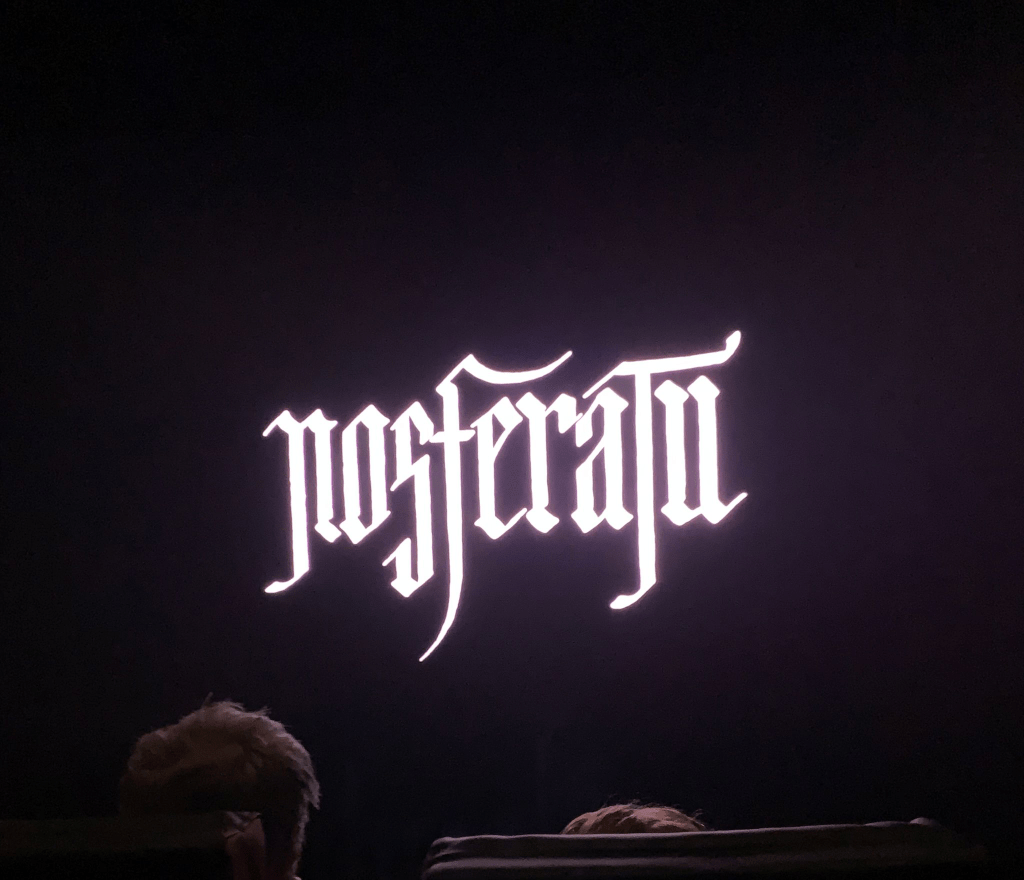
Nosferatu (2025) Review: Robert Eggers’ triumphantly terrifying return to vampiric form

It is unlikely that the director of Nosferatu (1922), F. W. Murnau, would’ve imagined 102 years later there would be a remake of his film which so closely recaptures the essence of the original. When I first watched Murnau’s original film, I was immediately struck by its captivatingly ominous atmosphere, despite the fact it is one of the oldest films I’ve ever watched. I found it to be particularly effective when the titular vampire wasn’t on screen. As a viewer you’re only left to imagine what his presence is like, the musical score and camera work reminding us that he is coming, filling us with dread. I can imagine this is how Robert Eggers felt when he first watched the film, as a remake has been a passion project of his for 10 years. Despite his minimal filmography, Eggers’ has proved himself to be one of the most interesting and distinct filmmakers of the past decade. The Witch (2015), The Lighthouse (2019) and The Northman (2022) all have a uniquely identifiable style, despite the fact they overlap into multiple genres. Having previously written about both Robert Eggers’ films and Nosferatu (1922), I was adamant that there was no other filmmaker who could successfully produce a modern remake of the horror classic given the overlap between their distinct yet straightforward approach to horror. Now a new year has arrived with a new take on the horror classic, I can safely say I was not disappointed.

Just as the 1922 original was, Nosferatu (2025) is effectively a retelling of Bram Stoker’s 1897 novel Dracula. The original was, in fact, an unlicensed adaption, so much so that Stoker’s widow won a lawsuit against the film which allegedly led to all copies of the film being destroyed. Of course, this wasn’t enough to stop the original from continuing to live decades later like some vampiric monster. Solely the fact that Eggers was able to successfully breath new life into a story which has been told countless times across many different medias proves not only the timelessness of the story, but his ability has a filmmaker. Nosferatu (2025) is effectively the same story as Dracula; a solicitor is called to sort a property deal out with a mysterious Count who resides in a creepy, isolated castle and eventually makes his way to the solicitor’s hometown to feed on the living. So how does one successfully retell a story which has been done to death? (Pun intended).

One of the first things that’s most striking about Egger’s film is its faithfulness to the time period. Nosferatu (2025) is set in 1838 Germany and you well and truly believe it. As demonstrated in his previous films (especially 2022’s The Northman), Eggers has shown to be able to masterfully capture historical accuracy, from the set design to the character’s speech. Nosferatu (2025) is no exception. The dialect is almost Shakespearean yet completely understandable for a modern audience, and the costume and set design fully immerses the audience into the 19th Century. Even the minimal use of lighting makes some scenes almost look black and white, creating that creaky, claustrophobic feeling that the 1922 original conveyed. Of course, the use of lighting and shadows is a big factor in also conveying the generally creepy atmosphere that you’d expect from a gothic horror film. This is something that combines Eggers’ distinct directorial features with what is required of a Nosferatu film; further supporting the notion that there was no other filmmaker right for the job. One sequence in particular involving horses and a carriage in a forest was particularly captivating for its camera work and use of shadows, reminding the audience that the titular vampire’s is somehow omnipresent…

Rarely is it that one can describe an actor truly ‘disappearing’ into a role. The only recent examples I can think of is Colin Farrell as The Penguin in Matt Reeves’ The Batman universe, or possibly Nicolas Cage in last year’s horror film Longlegs. Partly due to the incredible makeup and costume work, and partly due to the exceptional performance. The same can be said for Bill Skarsgård as Nosferatu. As far as I’m concerned, you’re not watching Skarsgård. You’re watching the real Count Orlok who happens to have a taste for the blood of the living. I appreciate the fact his appearance was kept relatively secretive before the release of the film, which makes his performance even more striking. When he first appears you still don’t see him; being out of focus in the foreground or background as the main focus is Nicholas Hoult’s terrified reactions as he listens to the Count’s deeply raspy tones. Skarsgård apparently worked on the voice for Nosferatu for weeks, providing a slow, deeply unsettling tone which combines the temperament of a Transylvanian lord and something much more sinister. His appearance may not be what you expect, but it certainly harkens to the appearance of 15th Century Prince Vlad the Impaler, who was allegedly the original inspiration for Stoker’s Dracula.

Just like the 1922 original, Nosferatu’s presence reverberates throughout the film, in part due to the fantastic performances from the film’s cast. As mentioned, Hoult’s Thomas Hutter seems genuinely terrified when he first meets the Count, as if it is the first time he’s seeing Skarsgård in full costume and makeup. As previously mentioned, the film’s dialogue is very Shakespearean-esque, which allows the actors to really play the time period to their full potential. Aaron Taylor-Johnson is excellent as Hutter’s friend and vampire skeptic Friedrich Harding, who effectively plays as a counter act to Willem Dafoe’s Professor Albin Eberhart Von Franz, a Swiss philosopher who happens to be an expert on the occult and all things vampiric. I truly believe Dafoe would fit right at home in any historical time period. The unique eccentricity in his performances in Eggers’ films show his versatility as an actor and his ability to adapt to any period of history. Ralph Ineson, who I believe is a substantially underrated actor with his low, raspy, Yorkshire voice, is also great as the doctor who treats Ellen for her ‘sickness’. Which brings me to the performance that everyone is going to be discussing; Lily-Rose Depp as Ellen Hutter. The film requires a lot from her as an actor both emotionally and physically; convincing us that she is under the spell of the Count by physically contorting her body and face without any additional editing, which she pulls off with terrifying magnificence. Similarly, however, Simon McBurney as solicitor turned madman Herr Knock terrifically pulls of feats of terrifying emotional and physical derangement which must also not go unappreciated.

Nosferatu (2025) is a real treat for horror fans. It is clearly a film made by people who truly care about the source material and historical accuracy, and whose sole interest is immersing an audience in its world for two hours. It recaptures the distinctly unsettling atmosphere of the original, whilst using particularly grotesque and terrifying imagery to revitalise the horror for a modern audience and show us that vampires can still be scary. As for criticisms, I struggle to find many. Being a gothic horror film, some may find it a little slow paced, and it could perhaps leave you wanting to see more of the Count himself, but ultimately that is the purpose of the film. To take the time to fill its audience with dread and only imagine the horrors that await. I wouldn’t even describe Nosferatu as scary, but it doesn’t need to be. Scaring a modern film audience is an increasingly difficult task year by year, and films such as this opt to consistently and effectively unsettle and discomfort an audience rather than outrightly scare them, which is arguably just as effective. Everything from its chilling musical score by The Northman composer Robin Carolan to its exceptional historical accuracy, Robert Eggers’ Nosferatu is a film made to be seen at the cinema, and might very well be Eggers’ magnum opus. Happy New Year to cinema.
Rating: 4.5 out of 5.

Why I don’t watch movie trailers anymore

If you’re early enough to the cinema you’ll be lucky enough to get a glimpse of previews of upcoming film releases, which is arguably one of the biggest selling points for movies. Usually they’ll be for films you haven’t heard of, or films you have heard of but have not yet seen the trailer. Some films sometimes even warrant viewing the trailer when it is released online, if they are anticipated enough by the likes of big studios, directors or franchises. Recently however, I have considered viewing trailers as an unfortunate experience rather than a fortunate one, and I tend to avoid seeking out the trailer for something unless under exceptional circumstances. The reason? Trailers spoil the movies.

This is not a recent problem. Ever since a trailer for Castaway (2001) revealed whether Tom Hanks escapes the island, there has always been controversy over trailers spoiling movies. The Terminator franchise is another infamous culprit, with the trailers for several of the instalments revealing a little too much information about their villains. If you look up any major movie trailer online, there’s a likely chance you’ll find comments about how it made people feel as if they watched the entire movie in the trailer. Granted, if you haven’t seen the movie, it is impossible to tell how much of the movie the trailer reveals. A recent example is M. Night Shyamalan’s Trap, a movie about a police operation to trap a serial killer at a concert. However, the big ‘twist’ the trailer seems to spoil is that the father (Josh Hartnett) is the killer. M. Night Shyamalan is known for his plot twists, so to make such a significant reveal in the trailer of his film seems uncharacteristic of him. However, having seen the film, the trailer only reveals the first half of the movie.

Some trailers have undoubtedly spoiled major plot points in movies; from the infamous plot reveal in the trailer for 1973’s Soylent Green, to the recent thriller remake Speak no evil revealing what happens at the end of the movie. Nevertheless, most trailers don’t go this far. More commonly trailers reveal too much general information about a movie which diminishes the excitement of watching a movie for the first time. It makes you feel as if all those YouTube comments were justified in saying the whole movie was in the trailer.Another recent example for this which I experienced was the trailer for Alien Romulus. The trailer not only exposes some of the film’s most exciting action sequences, but also that it would have another iconic chest-bursting scene. Granted, I thoroughly enjoyed the movie itself, but I found myself reflecting that some of the action or scary scenes would havehad more of an impact if they weren’t shown in the trailer. This is something I sadly find myself thinking evermore frequently after watching new movies. When it comes to big franchises and highly anticipated releases, fans are going to watch the movie when it comes out regardless of any marketing; I don’t need to see the trailer for Joker: Folie à Deux or Robert Eggers’ upcoming Nosferatu remake because I am already sold on the concepts they represent and because I enjoyed what came before.

Which brings me onto the reasons as to why trailers give away too much information. Firstly, ever since the pandemic, cinemas have been struggling to get back on their feet. Many Odeon and Cineworld branches have permanently closed, budget cuts have been made, and the companies have had to find new ways to get punters in the cinema. The pandemic habituated people into streaming; why spend £20 to go to see one film in the cinema when you can stream many more at home for a cheaper monthly subscription? As such, trailers have been targeted less towards fans and dedicated cinemagoers and more to general audiences who don’t care as much about significant plot points being revealed. Alternatively, perhaps movie studios simply feel they must sell as much of the movie as they possibly can to get people to return to the cinema.

Long gone are the days when most movie trailers would be a quick highlight reel of the general atmosphere and vibe of amovie. An effective movie trailer should sell this effectively without revealing too much of the plot. There are, however, recent exceptions. Oz Perkins’ recent horror Longlegs starring Nic Cage as a deformed serial killer had a very minimal yet intriguing marketing campaign. The trailers only tended to show seemingly random shots from the movie which effectively conveyed the creepy, ominous tone without revealing plotlines. They even went as far as creating a whole website about the murders from the film as if they were real, leaving further details completely at the discretion of the audience.

Sadly, most trailers aren’t this reserved, and more often provide cinema fans such as myself with too much information to sell a film. As such, I personally only tend to watch trailers if they are for a film I have heard very little about but sounds intriguing. I find the less I know about a film, the more I enjoy it. Hence why I generally avoid watching movie trailers.

Civil War review: The scariest movie of the year so far

Alex Garland doesn’t want you to know why they’re fighting. He wants you to know how it’s affected regular people. He wants you to know what it’s like to be forced to be neutral because it’s out of your control. He wants you to know what’s happened to a country in which a full-scale civil war was unimaginable. With his new movie, Civil War, he asks Americans (or anyone in the Western world really) what if there was a war going on right outside your door?

That’s the premise of Civil War in a nutshell. There’s army vehicles and soldiers on every street in the major cities, makeshift refugee camps in abandoned stadiums, and the sound of gunfire and bombs every night. The film follows the events of the war from the perspective of four journalists (played by Kirsten Dunst, Wagner Moura, Cailee Spaeny and Stephen McKinley Henderson) on a road trip from New York to Washington DC. Dunst excels at portraying the stoicism of a seasoned war journalist, alongside Moura who once again proves to be a standout as he was in the Netflix series Narcos (2015-2017). Spaeny is equally excellent as Dunst’s emotional opposite; the young, aspiring journalist who has yet to experience the harsh realities the seasoned adults have, making her a great surrogate for the audience. Civil War also features Nick Offerman as an unnervingly passive US president. The film opens with him rehearsing a speech; insensitively remarking ‘The greatest victory in the history of America’ which provides a layer of dark satire to the already poignant subject matter. Indeed, it was generally a great choice from Garland to have the film follow the perspective of war journalists; watching the events unfold from a seemingly neutral perspective makes the moral implications of the war much more apparent.

It would be underselling to describe their road trip as treacherous. Where Garland’s other films such as Men (2022) or Annihilation (2018) carefully orchestrate your emotional tension which lead to a climax, Civil War grabs your fear and keeps hold of it until the very end. There’s a constant state of tension whether the characters are drinking around a campfire in an abandoned parking lot with the sounds of battle in the distance, or on the front line dodging waves of gunfire as they attempt to document the harrowing events. Being one of A24’s biggest budget films so far, it certainly shows through its scenes of battle, which are some of the most gritty and realistic I’ve seen in a film. The sound design alone warrants this film to be seen on the biggest and loudest screen possible, with some of the most terrifying gunfire I’ve heard in a film.

As you’d expect from a big budget film headed by A24, Civil War also boasts some uniquely striking cinematography. From a crimson rural landscape lit up by patches of fire to a shot of someone sitting in front of colourful graffiti amidst an intense firefight, Civil War maintains its arthouse sensibilities whilst utilising its budget to create a stunningly terrifying world. The atmosphere it creates is undoubtedly dystopian, and even borderlines apocalyptic level, with certain elements fondly reminding me of the barren hopelessness of AMC’s The Walking Dead. Some of the music choices were especially reminiscent of The Walking Dead. Using heavy rock or even rap music to satirically juxtapose the dystopian atmosphere; a montage of tanks, helicopters and army vehicles being deployed to De La Soul’s Say No Go was oddly satisfying. Nevertheless, these moments never compromise the tension. There’s one scene in particular with a sniper which kept my teeth grinding even though I knew what was coming. In addition, the scene with Jesse Plemons turns out to be much more terrifying than the trailer let on, proving the actor to once again be the master of ‘unnervingly polite’ characters.

For a film which evokes such negative emotions, it deserves unanimous positivity. It’s concise narrative keeps you perpetually on the edge of your seat, and it displays some of the finest filmmaking A24 has produced so far. Some may find its subject matter overbearing at times, as it deals with the grim reality of war journalism rather heavy handedly, but I found this to be a good thing. It forces us to face a reality which we are not so far behind, and delivers a cautionary tale without getting bogged down in the politics. I’d even go so far as to say Civil War is the scariest film of the year so far, as it challenges something we often take for granted in the Western world – peace and comfort.

Rating: 5 out of 5.

Late Night with the Devil review: Demonic possession…on a talk show!?

Demonic possession is a sub-genre of horror which has arguably been done to death at this point. From The Conjuring franchise to last year’s disappointingly mediocre It Lives Inside and The Exorcist: Believer, the idea has ranged from reasonably frightening to downright underwhelming. That is until writer-director duo Colin and Cameron Cairnes conjured up the idea of presenting demonic possession on a live talk show.

The film stars David Dastmalchian in his first lead role as Jack Delroy, a host of 70s talk show. Being a found footage film, it is presented as a combination of documentary-style clips and the salvaged footage from the broadcast of Delroy’s show on Halloween night 1977. The supporting cast includes Laura Gordon as a parapsychologist, Ian Bliss as a former magician turned skeptic, and Ingrid Torelli as a girl who is allegedly possessed by a demon; all of which appear as guests on Delroy’s show.

The main component of this movie which compelled me to write about it was its style and editing. Its goal is to effectively convince a 2024 audience the events of the film really occurred in 1977. It opens with a documentary-style sequence narrated by prominent character actor Michael Ironside explaining the Jack Delroy’s background and what circumstances led him to divulge into the paranormal on his talk show. The rest of the film is the Halloween talk show presented as it was filmed, with commercial breaks including literal behind the scenes moments showing what the characters are doing in the meantime.

As a viewer, this makes you feel strangely more vulnerable than if you were watching a normal horror film. As with most found footage horror, it makes the plot feel much more grounded and as if the events were really unfolding in front of you. Being shot as a 70s talk show, the film also has that oddly unsettling atmosphere, with the graininess and the tension which occurs when something goes wrong live on air. In addition, Dastmalchian provides an exceptional performance as the host. He brings the necessary charisma but also that slightly insecure edge which is mostly seen in the behind the scenes footage. Torelli however was an unexpected standout. Her subtle yet effective mannerisms; glancing into the camera, distinct facial expressions, and soft yet sinister voice substantially increased the tension when she was introduced.

Throughout the film the viewer is left to ponder whether various problematic events on the show are technical difficulties or something far more inexplicable. This is directly addressed by Bliss’s skeptic Carmichael the Conjurer; calling out how certain ‘paranormal’ events are all a staged act to boost viewership. These events paradoxically place the viewer in a state of tension and comfort. You feel enveloped by the comfortably familiarity of the talk show, but also anxious as to whether the lights flashing, flickering screens, and certain reactions from characters are legitimately paranormal. The tension comes to a climax with, of course, with conjuring of a demon live on the show, which is subsequently followed by some disturbing backstory regarding certain characters, leading to a final scene which packs a horrific punch.

As intriguing and original as this film is, it may not please every horror fan. Some may interpret the ambiguity in tension as pacing issues, and the retro interpretation of the found footage genre may be viewed as a cheap way of invoking nostalgia. However, I found myself absorbed into the film’s atmosphere. It was creatively edited and acted in a way which made me feel like I was watching Night Owls with Jack Delroy on Halloween night in 1977. After all, isn’t that the goal of horror set in a certain time period?

Rating: 4.5 out of 5.

Imaginary review: Another great concept from Blumhouse…?

Imagination is one of the foundations for establishing horror. Watch almost any horror film, and at some point, they’ll be a moment when it forces the audience’s imagination do the work. In Alfred Hitchcock’s 1960 classic Psycho, it’s when Norman Bates looks into the camera with a menacing smile on his face, letting the audience only imagine what else he’s capable of. In John Carpenter’s The Fog (1980), it’s whenever the fog engulfs parts of the town and the audience is left to imagine what lurks within. Even indie horror film Skinamarink (2022) thrives from forcing its audience to imagine what the entity is stalking the children in the house by never showing and only implying. But what about a horror film literally called; Imaginary?

Kick-Ass 2 (2010) director Jeff Wadlow’s new horror Imaginary attempts to follow this archetype, but mostly fails to capture the same effect. The film centres around children’s author Jessica (DeWanda Wise) and her husband Max’s (Tom Payne) family; mostly his children Alice and Taylor (Pyper Braun and Taegen Burns). Once Alice discovers a harmless-looking Teddy bear in the basement of Jessica’s childhood home, things about Jessica’s childhood begin to unravel and the family is placed into a state of supernatural jeopardy. The film is produced by Jason Blum’s head honcho horror company Blumhouse Productions, the company behind recent films M3GAN (2022), Five Night’s at Freddy’s (2023), and Night Swim (2024). Unfortunately, Imaginary seems to be an amalgamation of the weaker aspects of those films, with some acceptable moments scattered throughout.

Similarly to the especially disappointing Night Swim, Imaginary isyet another great concept from Blumhouse executed with little precision. Kids having imaginary friends is a great concept for a horror film. The idea of a child having an invisible entity they can talk to that adults can’t see opens many doors of possibility for tension and horror. After all, good horror films often leave the audience to imagine the horror which is much more effective. Chauncey the bear seemed to me as Blumhouse attempting to create another modern horror icon to match the likes of Annabelle the doll or M3gan. Whilst his presence did conjure moments of malice and tension through the unlikely innocence of a girl’s imaginary friend, it was too toothless and infrequent to have a lasting effect. I understand studios prefer to keep a film’s rating as low as possible to increase its audience, but there were no scenes in this film that were particularly shocking. There is only one death and it is mostly off-screen, which leaves the only content warning of this film to be ‘Strong threat’.

I also felt this film convoluted the concept a little too much. Horror movies focusing on the story and characters too much has always dragged the horror aspect down, and in Imaginary it not only does that but also asks too much of its audience. Without spoiling, it doesn’t clearly set the boundaries of its story and world. I had several questions leaving the cinema, and it had clearly tried to borrow things from better horror films such as IT (2017), Insidious (2010), and even the Annabelle films. Granted, there are promising moments scattered throughout this film. The things it borrows from Insidious in particular I appreciated; that subtle, blink and you’ll miss it type horror always grabs my attention. There’s also a scene with the older sibling Taylor and the bear later in the film which was genuinely really unsettling, and was probably the best scene in the movie.

Perhaps Blumhouse need to start taking notes from more indie horror films such as last year’s Talk to Me and When Evil Lurks; let their characters be enveloped in the horror rather than spending too much time establishing layers and a story world. None of the characters are particularly likeable in Imaginary, and some dialogue moments border on horror-comedy, which I cannot imagine was the intention. There are some promising moments in Imaginary, and it establishes an interesting concept, but the dodgy dialogue, paper-thin characters, and convoluted story hugely let this one down.

Rating: 2 out of 5.

The Zone of Interest review: A haunting perspective on blissful ignorance

What do you hear from your house? What noises can you identify from the outside? A dog barking? A lawnmower? Probably nothing beyond mundaneness of everyday life. Now imagine instead of those noises, you hear sounds from the Auschwitz concentration camp from 1943. That is the overall tone of director Jonathan Glazer’s new film, The Zone of Interest.

The film depicts the Höss family, living a seemingly comfortable life next to the camp. The family consists of real-life camp commandant Rudolf Höss, his wife Hedwig, five children, and a dog. It follows their everyday lives, focusing mostly on Rudolf, in balancing his family life with his work. In doing this, the film presents the ultimate juxtaposition; how can one live an idyllic life knowing the atrocities that are occurring right over the wall? Like any good horror film, it’s what you don’t see that haunts you the most.

There’s little to no musical score. When there is, it consists of monotone, ominous soundscapes accompanied with a screen of black or red to force the audience to only imagine the reality of the situation. Otherwise, the film wants you to hear the haunting background noises coming from beyond the wall. This may not be a horror film, but it is arguably more haunting than most modern horror films. The film really wants its audience to feel the blissful ignorance of its characters. With the camp buildings pouring with smoke and looming behind the wall whilst Hedwig shows her mother around the garden, and the fateful sounds of gunfire and shouting as a child plays in his bedroom. It makes the familiarity of household life disconcerting as it shows the true dangers of complacency.

Christian Friedel and Sandra Hüller portray Rudolf and Hedwig, respectively. Hüller having recently been nominated for best supporting actress for the film; her second BAFTA nomination following best leading actress for Anatomy of a Fall. Rightfully so, as she displays the most emotional range in a cast of intentionally deadpan performances. Friedel’s portrayal of Rudolf also provides some depth to his character; showing his disconcertingly relatable love for animals and his family, yet never losing that haunting, emotionless complacency to the reality of his work.

The camera work is notably exceptional, often concisely framing its subject matter in a way which visually juxtaposes the idyllic family life against the backdrop of the camps. As previously mentioned, the camera barely moves. Glazer allegedly placed cameras around the home of the family, allowing their performances to be captured in a natural, almost documentary-style way. Moreover, the camera barely moves throughout the film, concisely capturing what it needs to and intentionally not showing what the audience can only imagine. The film has been nominated for several awards, including best picture, director, adapted screenplay, international feature film, and sound at the Academy awards alone. Similarly to fellow nominees Oppenheimer and Killer of the Flower Moon, The Zone of Interest once again forces its audience to take a glimpse into a dark period of human history to reflect on how disconcertingly easy it was for people to feign ignorance in the face of unspeakable atrocities.

Interestingly, this film is only rated a 12A, which shows how it hides the outright horror and lets the imagination of its audience do the work. Still, that’s not to say it’s not a tough watch. Not much particularly happens in the film, and there is one sequence edited over with a negative filter which seems a little out of pocket until you read up about it afterwards. Nevertheless, not much is meant to happen. Similarly to last year’s controversial yet harrowing Sound of Freedom, its focus isn’t on delivering a conventionally compelling narrative, it is on the idea of what horrible things happen behind closed doors, and how dangerously ignorant we become of it. I don’t think I’ve ever been in a quieter cinema than the one for this film.

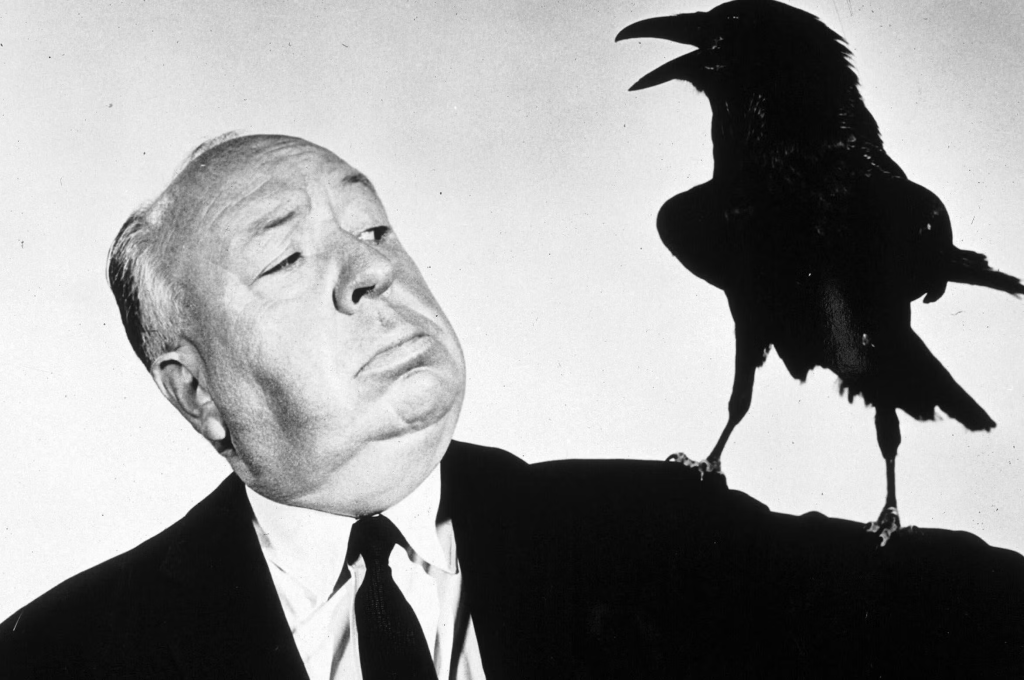
I finally watched some Hitchcock…

As a shameless ‘film bro’ and an avid horror fan, I felt like it was my duty to experience the work of a man who is often regarded as one of the greatest filmmakers in history. I’m referring to, of course, the ‘master of suspense’ Alfred Hitchcock. I got hold of a boxset of four of his most highly regarded films; Rear Window (1954), Vertigo (1958), Psycho (1960), and The Birds (1963). I watched them over the course of a week with my dad in release order, and, since it was Hitchcock, I thought I would do what I do best with movies – get all my thoughts out on this blog. What did I think? Did I enjoy them? Do they still hold up 60+ years later? Do I finally understand why Hitchcock is regarded as one of the greatest filmmakers and as the ‘master of suspense’? Read on and I will leave you in suspense no more…

First up was Hitchcock’s 1954 murder mystery Rear Window. It follows photographer L.B. ‘Jeff’ Jeffries (James Stewart) as he is confined to his apartment by a broken leg, with nothing better to do than spy on the neighbours across his Greenwich village courtyard. His spying takes a turn when he begins to suspect one of the neighbours has murdered his wife, and so Jeff enlists the help of his girlfriend Lisa (Grace Kelly) and nurse Stella (Thelma Ritter) to solve the mystery. What impressed me about this film was that the story unfolded almost entirely through Jeff’s apartment window through the perspective of his binoculars. What made this even more impressive was the detail that was put into constructing the elaborate set for the courtyard. It took six weeks to build, complete with lighting to accommodate both day and night sequences, and even included a drainage system for one rain sequence in the film. It was apparently the largest set built at Paramount studios at the time. It has a slow start, as the film is set in the same apartment, with the same shots, centred around the same three characters, yet it somehow still immerses the viewer in the narrative. The film confines you to Jeff’s wheelchair as he attempts to solve the murder mystery which makes it all the more gripping, and the last 20 minutes especially tense. There are certain shots in this film that are haunting and will remain with me for a long time.

Next was Vertigo, which if made today, would almost certainly be directed by Christopher Nolan. It is arguably Hitchcock’s most technically ambitious film, as it uses some unconventional special effects and is the first film to use the dolly zoom (when a camera zooms into a subject whilst physically moving away, distorting the background). The film follows former detective John ‘Scottie’ Ferguson (James Stewart once again) who has been hired as a personal investigator by Gavin Elster (Tom Helmore) to follow Elster’s wife Madeleine (Kim Novak). The elaborate plot of the film hinges on Scottie’s extreme fear of heights that stemmed from a traumatic experience earlier in his career. Despite the name, it doesn’t portray the condition of vertigo, but the dolly zoom is used to good effect to represent Scottie’s fear of heights. The plot is interestingly constructed, and the way Scottie’s fear is portrayed and weaved in throughout is very Nolan-esque. There’s some exceptional camera work which sells Scottie’s condition, and there’s one particular dream sequence which is the pinnacle of 1950s movie effects, and appears rather out of pocket compared to the rest of the film. My main issue with this film is that it is the archetype slow burner. Granted, it’s of the time, but the pace remains the same up until the last 20 minutes. At which point there is a significant plot twist which somewhat pays off the rest of the film, but generally the pacing is something you’ll have to bear with to appreciate the film fully. Still, there’s some tense moments and I can understand why it receives the praise it does. I always find it hilarious how terribly awkward love making scenes are in old movies. The actors look as if they have been given strict direction to underplay the passion.

Next was not only Hitchcock’s most iconic film, but one of the most iconic films of all time. What can I say about 1960’s Psycho that hasn’t already been said? It stars Vera Miles as Marion Crane who ends up at the notorious Bates Motel, where manager Norman Bates (Anthony Perkins) seemingly cares for his housebound mother. What follows reset the genre for horror, suspense, and even gore. This was the slasher before slashers, simply because it’s more suspense than actual slashing. I have no doubt the gore in this film back then was the equivalent to Saw now. The difference is, the violence in this film hits harder not because of the violence itself, but the care that Hitchcock put into creating a suspenseful build up. The reason this film is so timeless is because of how simple yet effective horror filmmaking is. Something as simple as a slow camera pan or a musical cue can create gripping tension when well executed. Bernard Herrmann’s iconic score is perfectly chilling, and provided the cookie cutter for horror movie and suspenseful scores to come. Anthony Perkins was exceptional as Norman Bates, from his awkward mannerisms and stutter to that psychotic stare at the end. His performance is like something you’d see in a film today, which is exactly why it still holds up. Granted, this film has its slow and duller moments and some of the dialogue is rather stilted but it’s not enough to break up the experience. This film also has one of the most memorable and chilling ends to a film I’ve ever seen…that smile.

Finally came 1963’s The Birds. Having only just watched Psycho a few days prior, I couldn’t help but think it was more than a coincidence that Norman Bates had a fascination with taxidermy birds prior to Hitchcock making a film called ‘The Birds’. The Birds stars Tippi Hedren as socialite Melanie Daniels who meets lawyer Mitch Brenner (Rod Taylor). Tippi is apparently so infatuated by Mitch that she follows him to his hometown of Bodega Bay with some lovebirds in tow. What follows is an avian onslaught; hundreds of birds begin attacking the people of the sleepy coastal town. Apparently, Hitchcock told the writer to develop the characters and a more elaborate story whilst keeping the concept of the original short story it is based on. It really shows. The first half of this film is about an unconvincing romance which makes Melanie’s actions the first 10 minutes rather toe-curling. Meanwhile the ominous presence of the birds is drip fed throughout, until about halfway through when the real bird attacks go up a gear. The concept of birds being a threat to humans is an interesting one. Birds are everywhere and there’s nothing we could do to stop them relentlessly attacking us in droves. It’s classic Hitchcock to turn these creatures which we live alongside and take for granted into a demonic and malevolent presence, all without a musical score too. Given the time of release, I imagine the special effects were also exceptionally impressive. I understand the characters are meant to be self-indulgent in their own ways to justify them being attacked by birds, but most of the dialogue I found quite unconvincing and one-dimensional. The film suggested the lovebirds were a plot device which would connect to the bird attacks, but surprisingly no such connection was outright made. Perhaps this was left intentionally ambiguous and merely implied by Hitchcock, but as such, I wasn’t entirely sure whether to take this film seriously. Nonetheless, from a technological and horror standpoint I can see why this film broke new ground and I can appreciate it for that.

I would describe watching some of Hitchcock’s highlights as enjoyable, but also educational. It was interesting to see from where much of the horror and suspense of today’s cinema is derived, and to watch some of the staples of classic cinema from a transitional time between old and new Hollywood in the 1950s-60s. My dad and I also watched the 2014 biopic Hitchcock, which tells the story of Hitchcock’s relationship with his wife Alma Reville whilst filming Psycho. The film was enjoyable, mainly due to the performances of Anthony Hopkins and Helen Mirren. However, as  the film covered a a long period of Hitchcock’s career, it only really focuses on the key events. It felt rather like a service film for Hitchcock fans, which detracted from the depth it could have had, especially during the making of Psycho itself. Nonetheless, the portrayal of Hitchcock’s awkward relationship with his wife is fascinating, as are the general nods to Psycho. Hitchcock’s films are the reason cinema is timeless. As I’ve mentioned in previous reviews of historical films, it’s always rewarding to see how great writing, acting, and filmmaking holds up after over six decades. This provided further evidence that time is irrelevant to film quality. To me, watching films from over six decades ago isn’t just a source of escapism into the stories themselves; it is also intriguing how they reflect the times at which they were made. It’s inspirational to see how far cinema has come, and the impression that that ambitious Englishman from East London made on movies.

Image courtesy of The Independent

Movies about movies: Why have they been popping up so much recently?

What defines a movie about movies? They remind us of the beauty of film, the appeal of the cinematic world, and the reason we go to see them on a big screen. A lot of movies reference movie-making in some way, but that doesn’t mean they are about movies. For example, King Kong is about a group of explorers who travel to Skull Island to document its inhabitants on film, but that isn’t what the film is about. The film is about adventure into the unknown, and the misunderstood creature that is Kong. I wouldn’t even describe a film like La La Land as a movie about movies. Whilst it is set in Hollywood and one of its main characters is an aspiring actress, it is not about filmmaking specifically.

Movies about movies weave films and filmmaking into their central themes. They remind audiences of the joy of going to the cinema, and the complexity of the filmmaking process itself. A quintessential example of this is Sam Mendes’s recent film, Empire of Light. Centred around a cinema set in Margate, it follows cinema workers Hilary (Olivia Colman) and Stephen (Micheal Ward) navigating the turbulent times of 1980s England as romance blossoms between them. The film integrates themes of racism, mental health and class, but to its core, it is about how film can bring people together. As Stephen so eloquently puts it to Hilary in one scene; ‘That beam of light, it’s an escape.’ Sam Mendes has himself stated it is based on his early experiences of going to the cinema, and many have regarded the film as his ‘love letter’ to cinema. Other quintessential examples of movies about movies are La La Land director Damien Chazelle’s Babylon, and Stephen Spielberg’s semi-autobiographical film The Fabelmans, both of which have hit UK cinemas in the past few months. Babylon is an outrageous, lavish, 3-hour picture about the transition of silent to sound films in the late 1920s. It stars Margot Robbie as aspiring actress Nellie LaRoy, Brad Pitt as declining actor Jack Conrad, and Diego Calva as Manny Torres – an up-coming filmmaker and Nellie’s love interest. The core of the film is about these characters navigating the 1920s-film scene, depicted through various sequences of film productions and showing how hilariously gruelling they could be. The ending encapsulates how far cinema has come, as Manny sits in a cinema in the early 1950s and reflects upon his life and how much of an impact film has had on it. Spielberg’s The Fabelmans, however, is quite the opposite of Babylon. It is a tender, heart-warming, coming-of-age story of aspiring filmmaker Sammy Fabelman and how films provide the vehicle for him to navigate his dysfunctional family life. Not only did the film garner critical acclaim, but was also nominated for over 100 awards, and won 23. What these films all have in common is (1) they were all released in UK cinemas in 2023; and (2) they illustrate how films play an integral role in the development and story of the lead characters.

This trend even extends to previous years, with films like 2022’s The Unbearable Weight of Massive Talent and 2021’s Belfast reminding its audiences of the joy of filmmaking and going to the cinema. Unbearable Weight is effectively Nicholas Cage’s hilariously self-aware tribute to cinema, as he plays a fictionalised version of himself and pokes fun at his own career. Belfast meanwhile was Kenneth Branagh’s sleeper hit about a boy brought up during the political turmoil of Northern Ireland in 1969. As with Empire of Light and The Fabelmans, the film revolves around its central character navigating troubling times with a love for films presented as a hopeful escape. Even Ti West’s recent 2022 horrors X and Pearl, both starring Mia Goth, can be regarded as tributes to early and late 20th century cinema and what made it so special.

Whilst there have always been movies about movies, there has rarely been so many within a short space of time. In the past, movies with movies woven so centrally into their plots have come much more infrequently, with releases like The Player (1992), Adaption (2002), The Artist (2011), and The Disaster Artist (2017) only appearing every few years. Considering the movies previously discussed have been released in 2022 and 2023, it is reasonable to assume it has partly been due to filmmakers getting back on track in a post-COVID world. Considering the detrimental impact the pandemic had on filmmaking and cinemas, perhaps filmmakers are choosing to remind people how valuable the cinematic experience is, causing a ‘bump’ in releases of movies about movies. Many filmmakers have even commented on this. British director Philippa Lowthorpe once stated how saddened she was that the performance of her film Misbehaviour (2020) was affected by the pandemic. Combined with the rise of streaming, people are seemingly less inclined to travel to cinemas. A 2020 survey by Variety even found 70% of people would rather watch movies at home than go to the cinema. So, perhaps filmmakers are attempting to remind audiences through the craft of visual storytelling that watching a film in the cinema is one of the most encapsulating experiences you can have. Even Tarantino has recently announced that he has completed the script for his next and final film, The Movie Critic, which will be set in the 1970s and centred around movie critic Pauline Kael. It would be interesting to discuss with mainstream directors such as Tarantino and Spielberg whether their mind-sets have been influenced by the effect the pandemic and streaming has had on cinemas. For now though, as an avid movie-goer, I couldn’t be happier about filmmakers choosing to produce more movies about movies. Hopefully, reminding people of the magic of the silver screen and the whole cinematic experience will have audiences returning to cinemas.

100 years of horror – Does Nosferatu still hold up?

Horror classic Nosferatu (1922) recently turned 100 years old – a milestone most films have yet to reach. I recently watched this centennial film in all its glory on Amazon Prime, making it the oldest movie I’ve ever watched. But as a 24-year-old film enthusiast indoctrinated into films by superheroes, CGI and animation, how does Nosferatu rate? Do the grainy colour-changing textures of the film affect its enjoyment? Does the atmospheric orchestral score compensate for the film’s lack of dialogue? Most importantly, does the film’s creepy atmosphere hold up? Well, when it comes to film, age is just a number, because I still thoroughly enjoyed Nosferatu.

I can see why Nosferatu is considered to be the origin of horror and vampires. It was made in the wake of the Spanish flu epidemic in 1918, and plays on the real fears of widespread disease and death. Nosferatu’s arrival to civilisation is as allegorical as it is literal. He brings fear, death and disease and disrupts the safety and security of a an otherwise stable society. It’s an interesting take on Bram Stoker’s original Dracula story, except the titular antagonist is much more dehumanised in this film. He’s permanently hunched, has pointy ears, freakishly long fingers, two sharp front teeth, and a pair of haunting, black eyes. His movements too, are ominously slow, giving the impression that this is no human, but a creature of the night. You can always feel his presence throughout the film even when he’s not on screen, simply by the effect he has on people and through the film’s atmosphere. If anything, the film’s grainy look adds to the creepy, claustrophobic feeling it thrives on. I thought it was interesting that the version I watched used different washes to indicate times of day – yellow and pink to indicate daytime, and green and blue indicating night. Even the vampiric descriptions in the book protagonist Hutter (Gustav von Wangenheim) reads are menacingly beautiful – describing the vampire in a way that forebodes Nosferatu’s presence.

The score does a perceptive job of creating the film’s creepy atmosphere. Depending on its intensity, it is a key indicator of the mood in each scene. When Hutter is enjoying time with his wife Ellen (Greta Schröder), the score is somber and peaceful. But when there is any mention of the supernatural, or when Hutter is travelling up a rocky road towards Count Orlok/Nosferatu’s castle, the score is much more ominous and intimidating. It gives an indication that something sinister is coming, and that something is a hunched, bloodthirsty vampire. The lighting of this film also enhances its atmosphere. From the use of a negative filter to convey the eeriness of Hutter’s journey, to the iconic shots of Nosferatu’s looming shadow, these simple effects remain genuinely creepy a century on.

Nosferatu still holds up not just because of its score and minimal effects to create its ominous atmosphere, but also by the themes of death and disease it conveys. There hasn’t been much in terms of remakes or reboots in the last century, aside from Werner Herzog’s 1979 remake, Nosferatu the Vampyre, and Shadow of the Vampire (2000) which was a fictionalised account of the making of the original. The 1979 remake didn’t particularly resonate with me, with it’s wooden acting, poor writing, and severe lack of tension. Willem Dafoe as Max Shreck/Nosferatu in Shadow of the Vampire does however sound appealing. Nonetheless, the influence of the original has disseminated throughout the horror genre. Travelling a long, eerie, mountainous road to an isolated location to create a sense of foreboding can be seen in films like The Shining (1980) and Evil Dead (1981), and even Nosferatu’s silent, predator-stalking-prey stance can be attributed in slashers like Halloween (1978) and Friday the 13th (1980). The Lighthouse (2019) and The Northman (2022) director Robert Eggers is writing and directing a remake of Nosferatu, with Pennywise himself Bill Skarsgård set to portray the titular role and Anya-Taylor Joy in an unknown role. If there was any filmmaker today who could adapt the atmosphere of the original Nosferatu for a modern audience, it would be Eggers; and I’m very much looking forward to it.

‘Doctor Strange in the Multiverse of Madness’ review: The MCU’s darkest, maddest film yet

When I first heard Sam Raimi would be directing Doctor Strange in the Multiverse of Madness, my first thought was – yes, he is exactly what the MCU needs. I knew we would be in for something substantially different to anything we’ve experienced so far in the MCU. Raimi’s history in both the superhero and horror genres made him more than qualified to helm what is quite possibly the MCU’s darkest and maddest film yet. His ability to maintain the integrity and grandeur of superheroism in his golden Spider-Man trilogy whilst incorporating elements of his horror roots set expectations for Multiverse of Madness to be one of the least MCU-esque films in all the right ways. Taking the reins on a story about one of Marvel’s most unique and mystical characters somehow seemed fit for the director, not to mention how the comic source material pushes the physical boundaries of the Marvel universe. So, was Multiverse of Madness the rollercoaster ride through the Marvel universe(s) it was expected to be? Let’s just say the rollercoaster took an ominous detour through the haunted house.

In Multiverse of Madness, Benedict Cumberbatch reprises his role as the (ex) Sorcerer Supreme for what seems like the umpteenth time, yet this being only his second solo outing. Cumberbatch maintains the appealing charisma of Stephen Strange, yet shows despite all his power how much of a flawed character he is. He always seems one finger lift away from causing diabolical consequences in the name of the greater good. To me, this has always has made Cumberbatch to Strange what Robert Downey Junior was to Iron Man, and something that Marvel always excels at; giving us flawed but likeable characters. Strange crosses paths with America Chavez (Xochitl Gomez), a teenager with the ability to punch holes through the multiverse, and attempts to protect her from demonic forces looking to steal her power. MCU regulars Benedict Wong and Elizabeth Olsen also join the cast as Wong and Wanda/Scarlett Witch respectively, in addition to some returning faces we haven’t seen since the first Doctor Strange.

Strange’s relationship with Chavez is somewhere between friendship and mentor-mentee, providing a majority of the quippy MCU humour in the film we’ve become so accustomed to. They also bring some heart in the right moments, and their backstories are unexpectedly similar in interesting ways. Wong maintains his status as an underrated Marvel favourite of mine, his chemistry with Strange proving yet again to be one of the most enjoyable aspects of the film. It was also nice to see Rachel McAdams back as Strange’s periodic love interest Christine. The film provides us with a little more depth into their relationship and shows us how much Christine still means to Strange despite his new life as the world’s most powerful wizard. However, the real highlight of the cast in Multiverse of Madness was Olsen’s performance as the Scarlett Witch. Whilst providing us with a sympathetic plight, she delivers a new, edgy side to the character we have so far only had hints at. Without revealing the details of said plight, she shows us how far someone is willing to go in the name of love.

One of the main attractions of this rollercoaster ride is the visuals. Multiverse of Madness is possibly one of the most visually experimental films of the MCU. The visual atmosphere sells the otherworldly feel very effectively, reminiscent of Steve Ditko’s original illustrations of Strange’s world in the comics. The film plunges you through the multiverse with a plethora of colours and textures disassembled and assembled in different combinations; illustrating that when it comes to the multiverse, anything is possible. The visuals also display how truly powerful Strange and Wanda are, showing the full extent of what kind of house-of-mirrors tricks they have up their sleeves. I often see a lot of complaints about Marvel films being overly reliant on CGI. Whilst I can understand not everyone is keen on a substantial amount of CGI in films, to me, Marvel films have boasted some of the most impressive visual effects in the last decade, and Multiverse of Madness is no exception. The only effective way to stay true to the colourful, visual story-telling of the comics is to utilise modern technology. Make the most of CGI to express the scale of these stories as if they were real, and create an other-worldly feeling of escapism which is exactly what made the comics so popular in the first place.

As if the unique visuals weren’t enough, Multiverse of Madness also has one of the darkest atmospheres in the MCU’s history. As previously mentioned, the film illustrates how truly powerful Strange and Wanda are, and the film stretches its 12A rating to show us how far they’re willing to divulge in darker magic. The film is undoubtedly the closest thing we’ve had to a Marvel horror film since the Blade movies of the late 90s and early 2000s (except perhaps the recent Morbius). As the film progresses, you can see more and more of Sam Raimi’s sprinkles of horror and the supernatural. From unique cinematography to striking visuals, the film boasts some genuinely unsettling sequences in all the right ways. Be forewarned, the violence in the film is almost akin to fully adult-rated superhero content like Amazon Prime’s The Boys or Invincible. Anything in the superhero genre which isn’t afraid to go all out with the level of violence is something I always appreciate. It shows us how powerful the characters truly are beyond their conventional family friendly settings. The dark atmosphere of the film is only elevated by Danny Elfman’s hair-raising musical score, and I don’t think anyone else could’ve possibly been a better fit to score the film. Elfman’s signature supernatural style is very prominent here, using strings and choir to show of the film’s comic book grandeur whilst maintaining it’s frightening atmosphere. I was particularly impressed by some of the musical cues, with some high-pitched string sound effects elevating jump scares (yes, this film has jump scares) which almost reminded me of the Insidious films. If I’m comparing an MCU film to quite possibly one of the scariest horror movie franchises in recent years, you know you’re in for something special.

Whilst Multiverse of Madness was a thoroughly enjoyable film, I will acknowledge that it won’t be for everyone. Being the first MCU film after the cameo-filled phenomenon that was Spider-Man: No Way Home, I think Multiverse of Madness has become a victim of overhype. During the months leading up to its release, the internet was bubbling with fan-theories and rumours about the film’s cast and plot, and many came to believe it would top No Way Home with it’s level of cameos and crossovers. Whilst the film has it’s fair share of surprises, I couldn’t help but feel like it certainly would’ve left many fans wanting more. Personally, the fact that it may have been a little overhyped didn’t affect my enjoyment. It deconstructs the superhero genre and shows how much Sam Raimi excels as a director. It shows us that the multiverse isn’t about breathtaking cameos and plot twists, it plays with the idea that somewhere, somehow, there is a universe where we’re ‘happier’. Perhaps somewhere where things have worked out for the better, somewhere where we’re living out our ideal lives. So, the film asks; at what cost? This fundamental question gave the film a level of depth I was pleasantly surprised by.

The dark themes of Multiverse of Madness gave me the impression Marvel are experimenting with different genres; testing the waters to see how audiences react to a horror-themed MCU film. This is undoubtedly a good thing, as I’ve also seen complaints about the MCU becoming rather formulaic and substantially reliant on it’s humour. Multiverse of Madness has very little humour. It is a dark film which takes the MCU to places it hasn’t ventured before, and whilst it may not be the cameo-filled phenomenon that fans hoped it to be, it proves that after so many years Marvel are still willing to keep their franchise fresh and find new ways to make it appealing.