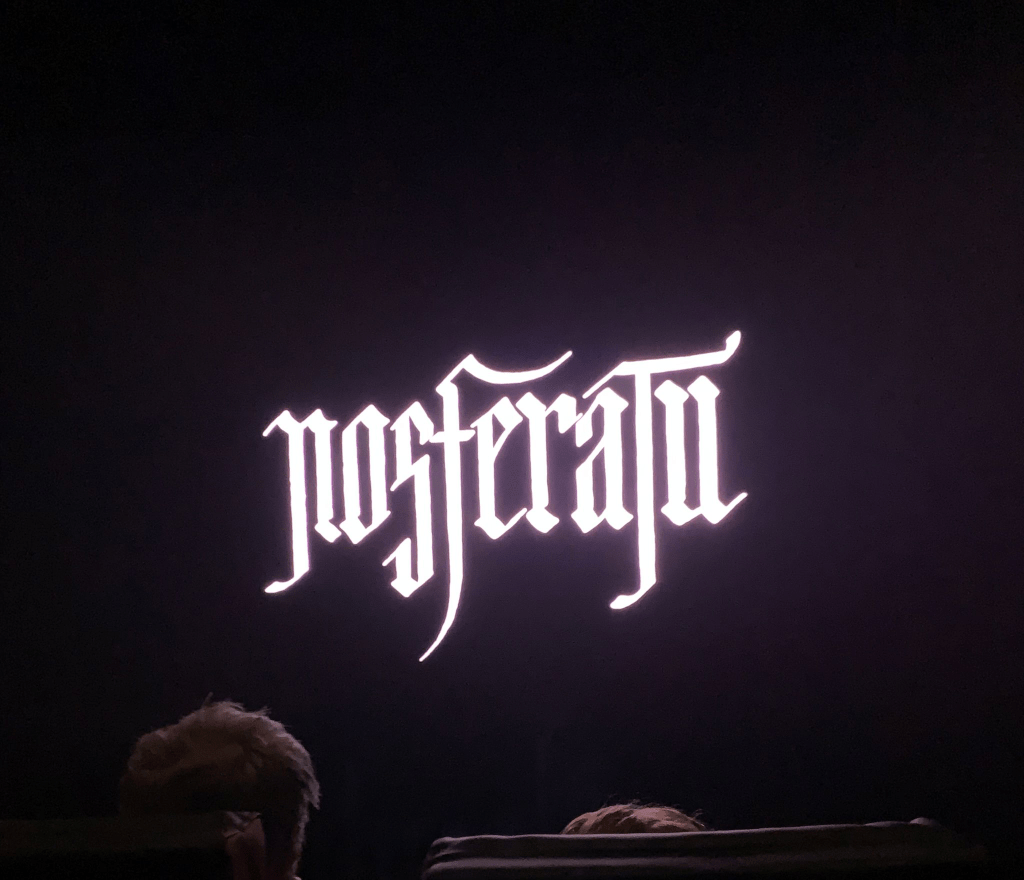
Nosferatu (2025) Review: Robert Eggers’ triumphantly terrifying return to vampiric form

It is unlikely that the director of Nosferatu (1922), F. W. Murnau, would’ve imagined 102 years later there would be a remake of his film which so closely recaptures the essence of the original. When I first watched Murnau’s original film, I was immediately struck by its captivatingly ominous atmosphere, despite the fact it is one of the oldest films I’ve ever watched. I found it to be particularly effective when the titular vampire wasn’t on screen. As a viewer you’re only left to imagine what his presence is like, the musical score and camera work reminding us that he is coming, filling us with dread. I can imagine this is how Robert Eggers felt when he first watched the film, as a remake has been a passion project of his for 10 years. Despite his minimal filmography, Eggers’ has proved himself to be one of the most interesting and distinct filmmakers of the past decade. The Witch (2015), The Lighthouse (2019) and The Northman (2022) all have a uniquely identifiable style, despite the fact they overlap into multiple genres. Having previously written about both Robert Eggers’ films and Nosferatu (1922), I was adamant that there was no other filmmaker who could successfully produce a modern remake of the horror classic given the overlap between their distinct yet straightforward approach to horror. Now a new year has arrived with a new take on the horror classic, I can safely say I was not disappointed.

Just as the 1922 original was, Nosferatu (2025) is effectively a retelling of Bram Stoker’s 1897 novel Dracula. The original was, in fact, an unlicensed adaption, so much so that Stoker’s widow won a lawsuit against the film which allegedly led to all copies of the film being destroyed. Of course, this wasn’t enough to stop the original from continuing to live decades later like some vampiric monster. Solely the fact that Eggers was able to successfully breath new life into a story which has been told countless times across many different medias proves not only the timelessness of the story, but his ability has a filmmaker. Nosferatu (2025) is effectively the same story as Dracula; a solicitor is called to sort a property deal out with a mysterious Count who resides in a creepy, isolated castle and eventually makes his way to the solicitor’s hometown to feed on the living. So how does one successfully retell a story which has been done to death? (Pun intended).

One of the first things that’s most striking about Egger’s film is its faithfulness to the time period. Nosferatu (2025) is set in 1838 Germany and you well and truly believe it. As demonstrated in his previous films (especially 2022’s The Northman), Eggers has shown to be able to masterfully capture historical accuracy, from the set design to the character’s speech. Nosferatu (2025) is no exception. The dialect is almost Shakespearean yet completely understandable for a modern audience, and the costume and set design fully immerses the audience into the 19th Century. Even the minimal use of lighting makes some scenes almost look black and white, creating that creaky, claustrophobic feeling that the 1922 original conveyed. Of course, the use of lighting and shadows is a big factor in also conveying the generally creepy atmosphere that you’d expect from a gothic horror film. This is something that combines Eggers’ distinct directorial features with what is required of a Nosferatu film; further supporting the notion that there was no other filmmaker right for the job. One sequence in particular involving horses and a carriage in a forest was particularly captivating for its camera work and use of shadows, reminding the audience that the titular vampire’s is somehow omnipresent…

Rarely is it that one can describe an actor truly ‘disappearing’ into a role. The only recent examples I can think of is Colin Farrell as The Penguin in Matt Reeves’ The Batman universe, or possibly Nicolas Cage in last year’s horror film Longlegs. Partly due to the incredible makeup and costume work, and partly due to the exceptional performance. The same can be said for Bill Skarsgård as Nosferatu. As far as I’m concerned, you’re not watching Skarsgård. You’re watching the real Count Orlok who happens to have a taste for the blood of the living. I appreciate the fact his appearance was kept relatively secretive before the release of the film, which makes his performance even more striking. When he first appears you still don’t see him; being out of focus in the foreground or background as the main focus is Nicholas Hoult’s terrified reactions as he listens to the Count’s deeply raspy tones. Skarsgård apparently worked on the voice for Nosferatu for weeks, providing a slow, deeply unsettling tone which combines the temperament of a Transylvanian lord and something much more sinister. His appearance may not be what you expect, but it certainly harkens to the appearance of 15th Century Prince Vlad the Impaler, who was allegedly the original inspiration for Stoker’s Dracula.

Just like the 1922 original, Nosferatu’s presence reverberates throughout the film, in part due to the fantastic performances from the film’s cast. As mentioned, Hoult’s Thomas Hutter seems genuinely terrified when he first meets the Count, as if it is the first time he’s seeing Skarsgård in full costume and makeup. As previously mentioned, the film’s dialogue is very Shakespearean-esque, which allows the actors to really play the time period to their full potential. Aaron Taylor-Johnson is excellent as Hutter’s friend and vampire skeptic Friedrich Harding, who effectively plays as a counter act to Willem Dafoe’s Professor Albin Eberhart Von Franz, a Swiss philosopher who happens to be an expert on the occult and all things vampiric. I truly believe Dafoe would fit right at home in any historical time period. The unique eccentricity in his performances in Eggers’ films show his versatility as an actor and his ability to adapt to any period of history. Ralph Ineson, who I believe is a substantially underrated actor with his low, raspy, Yorkshire voice, is also great as the doctor who treats Ellen for her ‘sickness’. Which brings me to the performance that everyone is going to be discussing; Lily-Rose Depp as Ellen Hutter. The film requires a lot from her as an actor both emotionally and physically; convincing us that she is under the spell of the Count by physically contorting her body and face without any additional editing, which she pulls off with terrifying magnificence. Similarly, however, Simon McBurney as solicitor turned madman Herr Knock terrifically pulls of feats of terrifying emotional and physical derangement which must also not go unappreciated.

Nosferatu (2025) is a real treat for horror fans. It is clearly a film made by people who truly care about the source material and historical accuracy, and whose sole interest is immersing an audience in its world for two hours. It recaptures the distinctly unsettling atmosphere of the original, whilst using particularly grotesque and terrifying imagery to revitalise the horror for a modern audience and show us that vampires can still be scary. As for criticisms, I struggle to find many. Being a gothic horror film, some may find it a little slow paced, and it could perhaps leave you wanting to see more of the Count himself, but ultimately that is the purpose of the film. To take the time to fill its audience with dread and only imagine the horrors that await. I wouldn’t even describe Nosferatu as scary, but it doesn’t need to be. Scaring a modern film audience is an increasingly difficult task year by year, and films such as this opt to consistently and effectively unsettle and discomfort an audience rather than outrightly scare them, which is arguably just as effective. Everything from its chilling musical score by The Northman composer Robin Carolan to its exceptional historical accuracy, Robert Eggers’ Nosferatu is a film made to be seen at the cinema, and might very well be Eggers’ magnum opus. Happy New Year to cinema.
Rating: 4.5 out of 5.

Why I don’t watch movie trailers anymore

If you’re early enough to the cinema you’ll be lucky enough to get a glimpse of previews of upcoming film releases, which is arguably one of the biggest selling points for movies. Usually they’ll be for films you haven’t heard of, or films you have heard of but have not yet seen the trailer. Some films sometimes even warrant viewing the trailer when it is released online, if they are anticipated enough by the likes of big studios, directors or franchises. Recently however, I have considered viewing trailers as an unfortunate experience rather than a fortunate one, and I tend to avoid seeking out the trailer for something unless under exceptional circumstances. The reason? Trailers spoil the movies.

This is not a recent problem. Ever since a trailer for Castaway (2001) revealed whether Tom Hanks escapes the island, there has always been controversy over trailers spoiling movies. The Terminator franchise is another infamous culprit, with the trailers for several of the instalments revealing a little too much information about their villains. If you look up any major movie trailer online, there’s a likely chance you’ll find comments about how it made people feel as if they watched the entire movie in the trailer. Granted, if you haven’t seen the movie, it is impossible to tell how much of the movie the trailer reveals. A recent example is M. Night Shyamalan’s Trap, a movie about a police operation to trap a serial killer at a concert. However, the big ‘twist’ the trailer seems to spoil is that the father (Josh Hartnett) is the killer. M. Night Shyamalan is known for his plot twists, so to make such a significant reveal in the trailer of his film seems uncharacteristic of him. However, having seen the film, the trailer only reveals the first half of the movie.

Some trailers have undoubtedly spoiled major plot points in movies; from the infamous plot reveal in the trailer for 1973’s Soylent Green, to the recent thriller remake Speak no evil revealing what happens at the end of the movie. Nevertheless, most trailers don’t go this far. More commonly trailers reveal too much general information about a movie which diminishes the excitement of watching a movie for the first time. It makes you feel as if all those YouTube comments were justified in saying the whole movie was in the trailer.Another recent example for this which I experienced was the trailer for Alien Romulus. The trailer not only exposes some of the film’s most exciting action sequences, but also that it would have another iconic chest-bursting scene. Granted, I thoroughly enjoyed the movie itself, but I found myself reflecting that some of the action or scary scenes would havehad more of an impact if they weren’t shown in the trailer. This is something I sadly find myself thinking evermore frequently after watching new movies. When it comes to big franchises and highly anticipated releases, fans are going to watch the movie when it comes out regardless of any marketing; I don’t need to see the trailer for Joker: Folie à Deux or Robert Eggers’ upcoming Nosferatu remake because I am already sold on the concepts they represent and because I enjoyed what came before.

Which brings me onto the reasons as to why trailers give away too much information. Firstly, ever since the pandemic, cinemas have been struggling to get back on their feet. Many Odeon and Cineworld branches have permanently closed, budget cuts have been made, and the companies have had to find new ways to get punters in the cinema. The pandemic habituated people into streaming; why spend £20 to go to see one film in the cinema when you can stream many more at home for a cheaper monthly subscription? As such, trailers have been targeted less towards fans and dedicated cinemagoers and more to general audiences who don’t care as much about significant plot points being revealed. Alternatively, perhaps movie studios simply feel they must sell as much of the movie as they possibly can to get people to return to the cinema.

Long gone are the days when most movie trailers would be a quick highlight reel of the general atmosphere and vibe of amovie. An effective movie trailer should sell this effectively without revealing too much of the plot. There are, however, recent exceptions. Oz Perkins’ recent horror Longlegs starring Nic Cage as a deformed serial killer had a very minimal yet intriguing marketing campaign. The trailers only tended to show seemingly random shots from the movie which effectively conveyed the creepy, ominous tone without revealing plotlines. They even went as far as creating a whole website about the murders from the film as if they were real, leaving further details completely at the discretion of the audience.

Sadly, most trailers aren’t this reserved, and more often provide cinema fans such as myself with too much information to sell a film. As such, I personally only tend to watch trailers if they are for a film I have heard very little about but sounds intriguing. I find the less I know about a film, the more I enjoy it. Hence why I generally avoid watching movie trailers.

Imaginary review: Another great concept from Blumhouse…?

Imagination is one of the foundations for establishing horror. Watch almost any horror film, and at some point, they’ll be a moment when it forces the audience’s imagination do the work. In Alfred Hitchcock’s 1960 classic Psycho, it’s when Norman Bates looks into the camera with a menacing smile on his face, letting the audience only imagine what else he’s capable of. In John Carpenter’s The Fog (1980), it’s whenever the fog engulfs parts of the town and the audience is left to imagine what lurks within. Even indie horror film Skinamarink (2022) thrives from forcing its audience to imagine what the entity is stalking the children in the house by never showing and only implying. But what about a horror film literally called; Imaginary?

Kick-Ass 2 (2010) director Jeff Wadlow’s new horror Imaginary attempts to follow this archetype, but mostly fails to capture the same effect. The film centres around children’s author Jessica (DeWanda Wise) and her husband Max’s (Tom Payne) family; mostly his children Alice and Taylor (Pyper Braun and Taegen Burns). Once Alice discovers a harmless-looking Teddy bear in the basement of Jessica’s childhood home, things about Jessica’s childhood begin to unravel and the family is placed into a state of supernatural jeopardy. The film is produced by Jason Blum’s head honcho horror company Blumhouse Productions, the company behind recent films M3GAN (2022), Five Night’s at Freddy’s (2023), and Night Swim (2024). Unfortunately, Imaginary seems to be an amalgamation of the weaker aspects of those films, with some acceptable moments scattered throughout.

Similarly to the especially disappointing Night Swim, Imaginary isyet another great concept from Blumhouse executed with little precision. Kids having imaginary friends is a great concept for a horror film. The idea of a child having an invisible entity they can talk to that adults can’t see opens many doors of possibility for tension and horror. After all, good horror films often leave the audience to imagine the horror which is much more effective. Chauncey the bear seemed to me as Blumhouse attempting to create another modern horror icon to match the likes of Annabelle the doll or M3gan. Whilst his presence did conjure moments of malice and tension through the unlikely innocence of a girl’s imaginary friend, it was too toothless and infrequent to have a lasting effect. I understand studios prefer to keep a film’s rating as low as possible to increase its audience, but there were no scenes in this film that were particularly shocking. There is only one death and it is mostly off-screen, which leaves the only content warning of this film to be ‘Strong threat’.

I also felt this film convoluted the concept a little too much. Horror movies focusing on the story and characters too much has always dragged the horror aspect down, and in Imaginary it not only does that but also asks too much of its audience. Without spoiling, it doesn’t clearly set the boundaries of its story and world. I had several questions leaving the cinema, and it had clearly tried to borrow things from better horror films such as IT (2017), Insidious (2010), and even the Annabelle films. Granted, there are promising moments scattered throughout this film. The things it borrows from Insidious in particular I appreciated; that subtle, blink and you’ll miss it type horror always grabs my attention. There’s also a scene with the older sibling Taylor and the bear later in the film which was genuinely really unsettling, and was probably the best scene in the movie.

Perhaps Blumhouse need to start taking notes from more indie horror films such as last year’s Talk to Me and When Evil Lurks; let their characters be enveloped in the horror rather than spending too much time establishing layers and a story world. None of the characters are particularly likeable in Imaginary, and some dialogue moments border on horror-comedy, which I cannot imagine was the intention. There are some promising moments in Imaginary, and it establishes an interesting concept, but the dodgy dialogue, paper-thin characters, and convoluted story hugely let this one down.

Rating: 2 out of 5.

Movies about movies: Why have they been popping up so much recently?

What defines a movie about movies? They remind us of the beauty of film, the appeal of the cinematic world, and the reason we go to see them on a big screen. A lot of movies reference movie-making in some way, but that doesn’t mean they are about movies. For example, King Kong is about a group of explorers who travel to Skull Island to document its inhabitants on film, but that isn’t what the film is about. The film is about adventure into the unknown, and the misunderstood creature that is Kong. I wouldn’t even describe a film like La La Land as a movie about movies. Whilst it is set in Hollywood and one of its main characters is an aspiring actress, it is not about filmmaking specifically.

Movies about movies weave films and filmmaking into their central themes. They remind audiences of the joy of going to the cinema, and the complexity of the filmmaking process itself. A quintessential example of this is Sam Mendes’s recent film, Empire of Light. Centred around a cinema set in Margate, it follows cinema workers Hilary (Olivia Colman) and Stephen (Micheal Ward) navigating the turbulent times of 1980s England as romance blossoms between them. The film integrates themes of racism, mental health and class, but to its core, it is about how film can bring people together. As Stephen so eloquently puts it to Hilary in one scene; ‘That beam of light, it’s an escape.’ Sam Mendes has himself stated it is based on his early experiences of going to the cinema, and many have regarded the film as his ‘love letter’ to cinema. Other quintessential examples of movies about movies are La La Land director Damien Chazelle’s Babylon, and Stephen Spielberg’s semi-autobiographical film The Fabelmans, both of which have hit UK cinemas in the past few months. Babylon is an outrageous, lavish, 3-hour picture about the transition of silent to sound films in the late 1920s. It stars Margot Robbie as aspiring actress Nellie LaRoy, Brad Pitt as declining actor Jack Conrad, and Diego Calva as Manny Torres – an up-coming filmmaker and Nellie’s love interest. The core of the film is about these characters navigating the 1920s-film scene, depicted through various sequences of film productions and showing how hilariously gruelling they could be. The ending encapsulates how far cinema has come, as Manny sits in a cinema in the early 1950s and reflects upon his life and how much of an impact film has had on it. Spielberg’s The Fabelmans, however, is quite the opposite of Babylon. It is a tender, heart-warming, coming-of-age story of aspiring filmmaker Sammy Fabelman and how films provide the vehicle for him to navigate his dysfunctional family life. Not only did the film garner critical acclaim, but was also nominated for over 100 awards, and won 23. What these films all have in common is (1) they were all released in UK cinemas in 2023; and (2) they illustrate how films play an integral role in the development and story of the lead characters.

This trend even extends to previous years, with films like 2022’s The Unbearable Weight of Massive Talent and 2021’s Belfast reminding its audiences of the joy of filmmaking and going to the cinema. Unbearable Weight is effectively Nicholas Cage’s hilariously self-aware tribute to cinema, as he plays a fictionalised version of himself and pokes fun at his own career. Belfast meanwhile was Kenneth Branagh’s sleeper hit about a boy brought up during the political turmoil of Northern Ireland in 1969. As with Empire of Light and The Fabelmans, the film revolves around its central character navigating troubling times with a love for films presented as a hopeful escape. Even Ti West’s recent 2022 horrors X and Pearl, both starring Mia Goth, can be regarded as tributes to early and late 20th century cinema and what made it so special.

Whilst there have always been movies about movies, there has rarely been so many within a short space of time. In the past, movies with movies woven so centrally into their plots have come much more infrequently, with releases like The Player (1992), Adaption (2002), The Artist (2011), and The Disaster Artist (2017) only appearing every few years. Considering the movies previously discussed have been released in 2022 and 2023, it is reasonable to assume it has partly been due to filmmakers getting back on track in a post-COVID world. Considering the detrimental impact the pandemic had on filmmaking and cinemas, perhaps filmmakers are choosing to remind people how valuable the cinematic experience is, causing a ‘bump’ in releases of movies about movies. Many filmmakers have even commented on this. British director Philippa Lowthorpe once stated how saddened she was that the performance of her film Misbehaviour (2020) was affected by the pandemic. Combined with the rise of streaming, people are seemingly less inclined to travel to cinemas. A 2020 survey by Variety even found 70% of people would rather watch movies at home than go to the cinema. So, perhaps filmmakers are attempting to remind audiences through the craft of visual storytelling that watching a film in the cinema is one of the most encapsulating experiences you can have. Even Tarantino has recently announced that he has completed the script for his next and final film, The Movie Critic, which will be set in the 1970s and centred around movie critic Pauline Kael. It would be interesting to discuss with mainstream directors such as Tarantino and Spielberg whether their mind-sets have been influenced by the effect the pandemic and streaming has had on cinemas. For now though, as an avid movie-goer, I couldn’t be happier about filmmakers choosing to produce more movies about movies. Hopefully, reminding people of the magic of the silver screen and the whole cinematic experience will have audiences returning to cinemas.

Why are modern day films and TV obsessed with popular 80s music?

There’s something delightfully nostalgic about watching a gratuitous fight scene to Bonnie Tyler’s 1984 hit ‘Holding out for a Hero‘ or a tense dance off between two groups of super humans to Kenny Loggins’s foot-tapping ‘Footloose‘ (both coincidentally recorded for the soundtrack to the film Footloose). The 1980s blessed pop culture with a colourful variety of both music and film, and aside from the fashion and various Pepsi and Coke ads, this vibrant synergy of music and film has become synonymous with the decade. Ever since films such as Footloose, cinema has continued to pepper soundtracks with the most popular 80s hits. But why has this tradition continued for so long in cinema? And why have films always gone back to 80s music rather than use the most popular contemporary music?  The answers to these questions can be gained from a delightful excursion through the history of pop music in film.

The pop musical energy of the 1980s is most often captured in fun, fast-paced flicks which don’t take themselves too seriously. A prime example that has excelled at using a retro soundtrack to capture this energy is the Guardians of the Galaxy series. Granted, not all of the songs in those films are of the ‘80s, but it seems overlaying a tense fight scene with some retro beats was the perfect way to capture the comical, vivacious energy of happy-go-lucky superhero characters. Even more mature superhero content such as The Boys and The Umbrella Academy series has used ‘80s pop music in some scenes to capture it’s hyper violent and sexual energy. What better way to capture this energy with music from a time where the world was more carefree and fun loving? ‘80s rock has trickled its way into Romcoms, coming-of-age films, and even horror. From 1999’s 10 Things I hate about You using Joan Jett’s Bad Reputation to incite title character Kat’s rebellious nature, to comedy horror Zombieland opening with a montage of zombie antics to Metallica’s For Whom the Bell Tolls, ‘80s rock seems to boost a film’s sense of chaotic fun. It ensures an audience knows a film doesn’t take itself too seriously in all the right ways.

Why do films use ‘80s music specifically? Pop music from the 60s and 70s is also often used in film, but they don’t quite capture the same vibe. 60s music in film tends to be used for more pure, cathartic energy with that raw guitar-bass-drum sound. Ironically one of the best examples is The Beatles’ Twist and Shout in the 1986 classic Ferris Bueller’s Day Off, in which Ferris gets a whole parade dancing to the sound of Paul, John, George and Ringo. The energetic yet edgy rock of the 70s however tends to be used to make gratuitous scenes more enjoyable. Take Lynyrd Skynyrd’s 1973 rock song Free Bird in 2014’s Kingsman: The Secret Service, which perfectly captures the slick yet violent energy of Colin Firth murdering a group of brainwashed Church goers. The increasing use of synthesisers and electrical experimentation with classic rock instruments in the 80s provided film soundtracks with the foot-tapping, cathartic energy of the 60s, but also the enjoyable edginess of the 70s. It seems therefore that 80s music effectively merges these two vibes together. Even the vast diversity of 90s music means it tends to capture different vibes in film. Known best for its cheesy Britney Spears, edgy Nirvana rock, or hard-hitting gangster rap, all of which have their own unique effect in film, but don’t quite match the colourful vibrancy of the 80s. As for the modern day, it’s difficult to imagine the music of Drake, Beyoncé or the Weekend to have the same colourfully nostalgic effect as Kenny Loggins, TOTO or Bon Jovi.

Thanks to modern day film and TV, the 1980s have come to be appreciated by a younger audience who aren’t quite old enough to have experienced the decade first hand. Given the huge revival in popularity of songs such as Kate Bush’s Running Up That Hill thanks to Stranger Things (which saw a staggering 9,900% streaming boost on Spotify) and Guns N’ Roses’ Sweet Child O’ Mine thanks to Thor: Love and Thunder, love of the ‘80s shows no signs of stopping. Who would have thought a decade could invoke such a unique sense of nostalgia for those that hadn’t even experienced it first time around? The ‘80s were a wonderfully simpler time with the coolest gadgets, cheesiest special effects, no internet spoilers, and enough funky synth tunes to keep Kevin Bacon dancing for decades to come.