I finally watched some Hitchcock…

As a shameless ‘film bro’ and an avid horror fan, I felt like it was my duty to experience the work of a man who is often regarded as one of the greatest filmmakers in history. I’m referring to, of course, the ‘master of suspense’ Alfred Hitchcock. I got hold of a boxset of four of his most highly regarded films; Rear Window (1954), Vertigo (1958), Psycho (1960), and The Birds (1963). I watched them over the course of a week with my dad in release order, and, since it was Hitchcock, I thought I would do what I do best with movies – get all my thoughts out on this blog. What did I think? Did I enjoy them? Do they still hold up 60+ years later? Do I finally understand why Hitchcock is regarded as one of the greatest filmmakers and as the ‘master of suspense’? Read on and I will leave you in suspense no more…

First up was Hitchcock’s 1954 murder mystery Rear Window. It follows photographer L.B. ‘Jeff’ Jeffries (James Stewart) as he is confined to his apartment by a broken leg, with nothing better to do than spy on the neighbours across his Greenwich village courtyard. His spying takes a turn when he begins to suspect one of the neighbours has murdered his wife, and so Jeff enlists the help of his girlfriend Lisa (Grace Kelly) and nurse Stella (Thelma Ritter) to solve the mystery. What impressed me about this film was that the story unfolded almost entirely through Jeff’s apartment window through the perspective of his binoculars. What made this even more impressive was the detail that was put into constructing the elaborate set for the courtyard. It took six weeks to build, complete with lighting to accommodate both day and night sequences, and even included a drainage system for one rain sequence in the film. It was apparently the largest set built at Paramount studios at the time. It has a slow start, as the film is set in the same apartment, with the same shots, centred around the same three characters, yet it somehow still immerses the viewer in the narrative. The film confines you to Jeff’s wheelchair as he attempts to solve the murder mystery which makes it all the more gripping, and the last 20 minutes especially tense. There are certain shots in this film that are haunting and will remain with me for a long time.

Next was Vertigo, which if made today, would almost certainly be directed by Christopher Nolan. It is arguably Hitchcock’s most technically ambitious film, as it uses some unconventional special effects and is the first film to use the dolly zoom (when a camera zooms into a subject whilst physically moving away, distorting the background). The film follows former detective John ‘Scottie’ Ferguson (James Stewart once again) who has been hired as a personal investigator by Gavin Elster (Tom Helmore) to follow Elster’s wife Madeleine (Kim Novak). The elaborate plot of the film hinges on Scottie’s extreme fear of heights that stemmed from a traumatic experience earlier in his career. Despite the name, it doesn’t portray the condition of vertigo, but the dolly zoom is used to good effect to represent Scottie’s fear of heights. The plot is interestingly constructed, and the way Scottie’s fear is portrayed and weaved in throughout is very Nolan-esque. There’s some exceptional camera work which sells Scottie’s condition, and there’s one particular dream sequence which is the pinnacle of 1950s movie effects, and appears rather out of pocket compared to the rest of the film. My main issue with this film is that it is the archetype slow burner. Granted, it’s of the time, but the pace remains the same up until the last 20 minutes. At which point there is a significant plot twist which somewhat pays off the rest of the film, but generally the pacing is something you’ll have to bear with to appreciate the film fully. Still, there’s some tense moments and I can understand why it receives the praise it does. I always find it hilarious how terribly awkward love making scenes are in old movies. The actors look as if they have been given strict direction to underplay the passion.

Next was not only Hitchcock’s most iconic film, but one of the most iconic films of all time. What can I say about 1960’s Psycho that hasn’t already been said? It stars Vera Miles as Marion Crane who ends up at the notorious Bates Motel, where manager Norman Bates (Anthony Perkins) seemingly cares for his housebound mother. What follows reset the genre for horror, suspense, and even gore. This was the slasher before slashers, simply because it’s more suspense than actual slashing. I have no doubt the gore in this film back then was the equivalent to Saw now. The difference is, the violence in this film hits harder not because of the violence itself, but the care that Hitchcock put into creating a suspenseful build up. The reason this film is so timeless is because of how simple yet effective horror filmmaking is. Something as simple as a slow camera pan or a musical cue can create gripping tension when well executed. Bernard Herrmann’s iconic score is perfectly chilling, and provided the cookie cutter for horror movie and suspenseful scores to come. Anthony Perkins was exceptional as Norman Bates, from his awkward mannerisms and stutter to that psychotic stare at the end. His performance is like something you’d see in a film today, which is exactly why it still holds up. Granted, this film has its slow and duller moments and some of the dialogue is rather stilted but it’s not enough to break up the experience. This film also has one of the most memorable and chilling ends to a film I’ve ever seen…that smile.

Finally came 1963’s The Birds. Having only just watched Psycho a few days prior, I couldn’t help but think it was more than a coincidence that Norman Bates had a fascination with taxidermy birds prior to Hitchcock making a film called ‘The Birds’. The Birds stars Tippi Hedren as socialite Melanie Daniels who meets lawyer Mitch Brenner (Rod Taylor). Tippi is apparently so infatuated by Mitch that she follows him to his hometown of Bodega Bay with some lovebirds in tow. What follows is an avian onslaught; hundreds of birds begin attacking the people of the sleepy coastal town. Apparently, Hitchcock told the writer to develop the characters and a more elaborate story whilst keeping the concept of the original short story it is based on. It really shows. The first half of this film is about an unconvincing romance which makes Melanie’s actions the first 10 minutes rather toe-curling. Meanwhile the ominous presence of the birds is drip fed throughout, until about halfway through when the real bird attacks go up a gear. The concept of birds being a threat to humans is an interesting one. Birds are everywhere and there’s nothing we could do to stop them relentlessly attacking us in droves. It’s classic Hitchcock to turn these creatures which we live alongside and take for granted into a demonic and malevolent presence, all without a musical score too. Given the time of release, I imagine the special effects were also exceptionally impressive. I understand the characters are meant to be self-indulgent in their own ways to justify them being attacked by birds, but most of the dialogue I found quite unconvincing and one-dimensional. The film suggested the lovebirds were a plot device which would connect to the bird attacks, but surprisingly no such connection was outright made. Perhaps this was left intentionally ambiguous and merely implied by Hitchcock, but as such, I wasn’t entirely sure whether to take this film seriously. Nonetheless, from a technological and horror standpoint I can see why this film broke new ground and I can appreciate it for that.

I would describe watching some of Hitchcock’s highlights as enjoyable, but also educational. It was interesting to see from where much of the horror and suspense of today’s cinema is derived, and to watch some of the staples of classic cinema from a transitional time between old and new Hollywood in the 1950s-60s. My dad and I also watched the 2014 biopic Hitchcock, which tells the story of Hitchcock’s relationship with his wife Alma Reville whilst filming Psycho. The film was enjoyable, mainly due to the performances of Anthony Hopkins and Helen Mirren. However, as  the film covered a a long period of Hitchcock’s career, it only really focuses on the key events. It felt rather like a service film for Hitchcock fans, which detracted from the depth it could have had, especially during the making of Psycho itself. Nonetheless, the portrayal of Hitchcock’s awkward relationship with his wife is fascinating, as are the general nods to Psycho. Hitchcock’s films are the reason cinema is timeless. As I’ve mentioned in previous reviews of historical films, it’s always rewarding to see how great writing, acting, and filmmaking holds up after over six decades. This provided further evidence that time is irrelevant to film quality. To me, watching films from over six decades ago isn’t just a source of escapism into the stories themselves; it is also intriguing how they reflect the times at which they were made. It’s inspirational to see how far cinema has come, and the impression that that ambitious Englishman from East London made on movies.
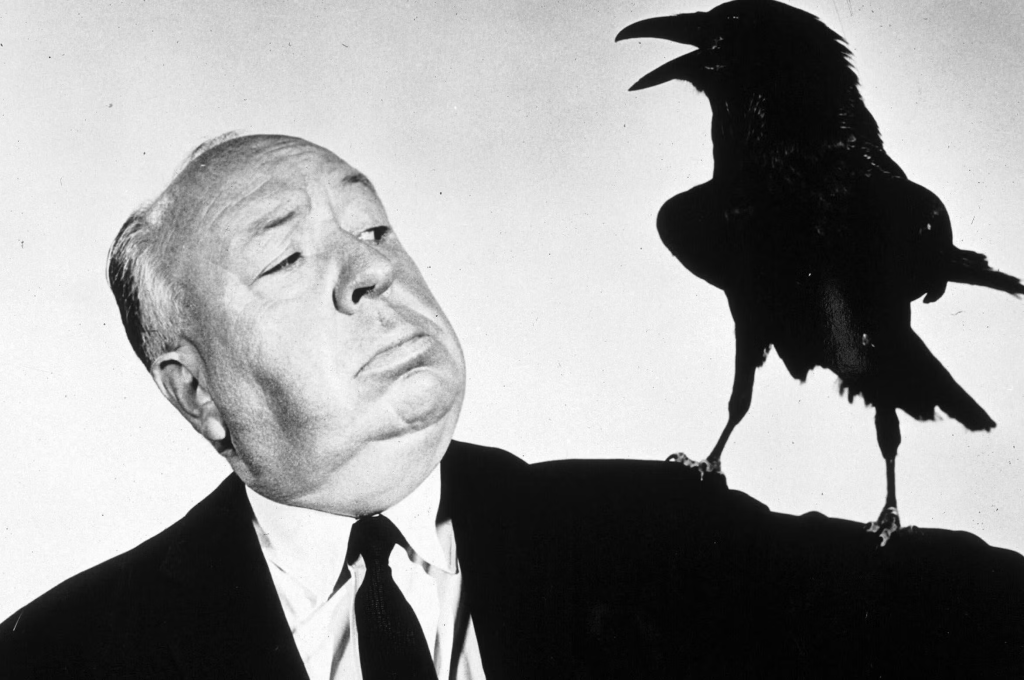
Image courtesy of The Independent

Lightyear review: Pixar takes Buzz to infinity and beyond

You can see the sweat on Buzz Lightyear’s face as he propels through the stars at hyper speed. You can hear the retro-style sci-fi sound effects scattered throughout the adventure. The shot of a lone space ranger floating through space shows the terrifying magnificence of the universe. More than anything, Lightyear shows the cosmic wonder of space exploration, and how Pixar are the pinnacle of film animation. It is a classic heartfelt Pixar romp disguised as a grand space adventure. Chris Evans’ voice turns what was originally a toy into a real person, Michael Giacchino’s epic score transports you to the unknown plains of T’Kani Prime and makes you feel as if you were travelling at light speed.

Lightyear is framed as the movie within the Toy Story universe which inspired the Buzz Lightyear toy line. This is reflected in the film’s 90s style sound effects, showing the care the sound team placed into the film which we’ve come to expect from Pixar. Even the Giacchino’s score somewhat reflects this; providing Buzz with a classic hero’s ‘riff’ throughout the film. which I loved. The film delivers what you’d expect from a Buzz Lightyear spin-off and more. Although this time around, it’s less about the heart and more about the adventure through space. Whilst it is appropriately heartfelt and poignant in places, Lightyear reflects how the stunning cinematography and visuals show how far animation has come. From intricate new landscapes on unknown planets to the vast expanse of open space (especially a spectacle to admire in IMAX), Lightyear is possibly the most stunning animated film of the year so far. It clearly intended to go lightyears beyond the scale of Toy Story; Andy’s room to Buzz in Toy Story is the entire universe to Buzz in Lightyear. Lightyear was undoubtedly going to contain nods to the first Toy Story, which are scattered just the right amount throughout the film. Not too much that the film feels it can’t stand on it’s own without the legacy of the original, but not too little that the source material is under appreciated by the filmmakers.

The film introduces us to some likeable new faces, which become integral to the film’s core message. On a mission to save quite possibly everything he cares about, Buzz is teamed up with the likes of Izzy (Keke Palmer), Mo (Taika Waititi), Darby (Dale Soules), and a hilariously adorable robot cat called Sox (Peter Sohn). Each of these characters bring something unique to the roster, and not only learn something about themselves, but teach Buzz a valuable Pixar take-home lesson which we can all relate to. Sox is undoubtedly a stand out; providing that quizzical humour of a naive android companion in all the right moments. What sci-fi adventure wouldn’t be complete without an interstellar cat? The film also puts an interesting spin on Buzz’s nemesis; Zurg. Not quite emperor in this iteration, but having a level of sympathetic depth which we’ve come to expect from, well, most movie villains at this point. Once again, the animation shines particularly with Zurg’s design; an intimidating, anime-inspired robot body which is about 10 times the size of Buzz and his companions. There was even some subtle nods to classic sci-fi cinema; including Alien, Star Wars, possibly even The Terminator which I really appreciated.

As a guy who used to run around his neighbourhood dressed as Buzz Lightyear, this film not only tingled my nostalgic affection for Toy Story, but also took me on a fantastic animated adventure through space. Lightyear is a quality film regardless of its connections to Toy Story. As with any new Pixar film, it shows how far animation has come in delivering stunning new visuals, fantastical sound design and musical score. Pixar are known for turning an out-of-this-world setting into a down to earth, emotional story which wells the throats of movie-goers. Lightyear certainly isn’t the most down to earth Pixar story to date, but it doesn’t need to be. It is a new story inspired by a beloved character, with a gorgeous new setting and engaging story fresh enough to entertain any audience and well throats at the right moments. Does it make me want to run around my neighbourhood dressed as Buzz again? Of course it does. Although it makes me want to go slightly beyond my neighbourhood.

‘Doctor Strange in the Multiverse of Madness’ review: The MCU’s darkest, maddest film yet

When I first heard Sam Raimi would be directing Doctor Strange in the Multiverse of Madness, my first thought was – yes, he is exactly what the MCU needs. I knew we would be in for something substantially different to anything we’ve experienced so far in the MCU. Raimi’s history in both the superhero and horror genres made him more than qualified to helm what is quite possibly the MCU’s darkest and maddest film yet. His ability to maintain the integrity and grandeur of superheroism in his golden Spider-Man trilogy whilst incorporating elements of his horror roots set expectations for Multiverse of Madness to be one of the least MCU-esque films in all the right ways. Taking the reins on a story about one of Marvel’s most unique and mystical characters somehow seemed fit for the director, not to mention how the comic source material pushes the physical boundaries of the Marvel universe. So, was Multiverse of Madness the rollercoaster ride through the Marvel universe(s) it was expected to be? Let’s just say the rollercoaster took an ominous detour through the haunted house.

In Multiverse of Madness, Benedict Cumberbatch reprises his role as the (ex) Sorcerer Supreme for what seems like the umpteenth time, yet this being only his second solo outing. Cumberbatch maintains the appealing charisma of Stephen Strange, yet shows despite all his power how much of a flawed character he is. He always seems one finger lift away from causing diabolical consequences in the name of the greater good. To me, this has always has made Cumberbatch to Strange what Robert Downey Junior was to Iron Man, and something that Marvel always excels at; giving us flawed but likeable characters. Strange crosses paths with America Chavez (Xochitl Gomez), a teenager with the ability to punch holes through the multiverse, and attempts to protect her from demonic forces looking to steal her power. MCU regulars Benedict Wong and Elizabeth Olsen also join the cast as Wong and Wanda/Scarlett Witch respectively, in addition to some returning faces we haven’t seen since the first Doctor Strange.

Strange’s relationship with Chavez is somewhere between friendship and mentor-mentee, providing a majority of the quippy MCU humour in the film we’ve become so accustomed to. They also bring some heart in the right moments, and their backstories are unexpectedly similar in interesting ways. Wong maintains his status as an underrated Marvel favourite of mine, his chemistry with Strange proving yet again to be one of the most enjoyable aspects of the film. It was also nice to see Rachel McAdams back as Strange’s periodic love interest Christine. The film provides us with a little more depth into their relationship and shows us how much Christine still means to Strange despite his new life as the world’s most powerful wizard. However, the real highlight of the cast in Multiverse of Madness was Olsen’s performance as the Scarlett Witch. Whilst providing us with a sympathetic plight, she delivers a new, edgy side to the character we have so far only had hints at. Without revealing the details of said plight, she shows us how far someone is willing to go in the name of love.

One of the main attractions of this rollercoaster ride is the visuals. Multiverse of Madness is possibly one of the most visually experimental films of the MCU. The visual atmosphere sells the otherworldly feel very effectively, reminiscent of Steve Ditko’s original illustrations of Strange’s world in the comics. The film plunges you through the multiverse with a plethora of colours and textures disassembled and assembled in different combinations; illustrating that when it comes to the multiverse, anything is possible. The visuals also display how truly powerful Strange and Wanda are, showing the full extent of what kind of house-of-mirrors tricks they have up their sleeves. I often see a lot of complaints about Marvel films being overly reliant on CGI. Whilst I can understand not everyone is keen on a substantial amount of CGI in films, to me, Marvel films have boasted some of the most impressive visual effects in the last decade, and Multiverse of Madness is no exception. The only effective way to stay true to the colourful, visual story-telling of the comics is to utilise modern technology. Make the most of CGI to express the scale of these stories as if they were real, and create an other-worldly feeling of escapism which is exactly what made the comics so popular in the first place.

As if the unique visuals weren’t enough, Multiverse of Madness also has one of the darkest atmospheres in the MCU’s history. As previously mentioned, the film illustrates how truly powerful Strange and Wanda are, and the film stretches its 12A rating to show us how far they’re willing to divulge in darker magic. The film is undoubtedly the closest thing we’ve had to a Marvel horror film since the Blade movies of the late 90s and early 2000s (except perhaps the recent Morbius). As the film progresses, you can see more and more of Sam Raimi’s sprinkles of horror and the supernatural. From unique cinematography to striking visuals, the film boasts some genuinely unsettling sequences in all the right ways. Be forewarned, the violence in the film is almost akin to fully adult-rated superhero content like Amazon Prime’s The Boys or Invincible. Anything in the superhero genre which isn’t afraid to go all out with the level of violence is something I always appreciate. It shows us how powerful the characters truly are beyond their conventional family friendly settings. The dark atmosphere of the film is only elevated by Danny Elfman’s hair-raising musical score, and I don’t think anyone else could’ve possibly been a better fit to score the film. Elfman’s signature supernatural style is very prominent here, using strings and choir to show of the film’s comic book grandeur whilst maintaining it’s frightening atmosphere. I was particularly impressed by some of the musical cues, with some high-pitched string sound effects elevating jump scares (yes, this film has jump scares) which almost reminded me of the Insidious films. If I’m comparing an MCU film to quite possibly one of the scariest horror movie franchises in recent years, you know you’re in for something special.

Whilst Multiverse of Madness was a thoroughly enjoyable film, I will acknowledge that it won’t be for everyone. Being the first MCU film after the cameo-filled phenomenon that was Spider-Man: No Way Home, I think Multiverse of Madness has become a victim of overhype. During the months leading up to its release, the internet was bubbling with fan-theories and rumours about the film’s cast and plot, and many came to believe it would top No Way Home with it’s level of cameos and crossovers. Whilst the film has it’s fair share of surprises, I couldn’t help but feel like it certainly would’ve left many fans wanting more. Personally, the fact that it may have been a little overhyped didn’t affect my enjoyment. It deconstructs the superhero genre and shows how much Sam Raimi excels as a director. It shows us that the multiverse isn’t about breathtaking cameos and plot twists, it plays with the idea that somewhere, somehow, there is a universe where we’re ‘happier’. Perhaps somewhere where things have worked out for the better, somewhere where we’re living out our ideal lives. So, the film asks; at what cost? This fundamental question gave the film a level of depth I was pleasantly surprised by.

The dark themes of Multiverse of Madness gave me the impression Marvel are experimenting with different genres; testing the waters to see how audiences react to a horror-themed MCU film. This is undoubtedly a good thing, as I’ve also seen complaints about the MCU becoming rather formulaic and substantially reliant on it’s humour. Multiverse of Madness has very little humour. It is a dark film which takes the MCU to places it hasn’t ventured before, and whilst it may not be the cameo-filled phenomenon that fans hoped it to be, it proves that after so many years Marvel are still willing to keep their franchise fresh and find new ways to make it appealing.

‘The Northman’ review: An epic tale of vikings, valour and vengeance

I don’t think the word ‘Viking’ is uttered once in the entirety of The Northman. This appropriately epitomises the authentic Norse feel of the film, as you don’t always need words to convey a feeling in filmmaking. Director Robert Eggers absorbs us in a brutal yet ancient world which runs red with the blood of fathers and sons, overseen by the Norse all-father God Odin. In typical Eggers style, the film blends the real world with the supernatural, using tight cinematography and ominous lighting to create an other-worldly feel to a period of real history. Eggers and Icelandic writer Sjón tell a tale which runs a thin line between valour and vengeance, and how following one’s fate isn’t always as straightforward as it seems. In a world filled with axes, gods, and the threads of fate, good and evil doesn’t exist; it is simply whoever plunges the sword in first.

The Northman follows Viking prince Amleth (Alexander Skarsgård) as he sets off on a path to avenge the death of his father, King Aurvandill (Ethan Hawke). The plot is based on the medieval Scandinavian legend which inspired Shakespeare’s Hamlet, which is very evident in the film’s story and performances. Every member of the cast give Shakespearean-esque performances, expressing raw emotion when needed and blending English with ancient Nordic tongues, which only adds to the other-worldly feel. Skarsgård gives a furious yet empathetic performance as Amleth; providing us with the raw, animalistic rage of a vengeful Viking, but also showing us he’s not completely unrelenting or heartless in the right moments. Anya Taylor-Joy is also a highlight, portraying Amleth’s love interest and Slavic sorceress Olga with supernatural charm, proving yet again her versatility in historical roles. Willem Dafoe was also a pleasant surprise to the cast, playing King Aurvandill’s fool in what would quite possibly be Dafoe’s ideal career if he lived in a Viking world. Ethan Hawke and Claes Bang’s performances as King Aurvandil and Fjölnir respectively also add to the authenticity of the world, and give modern day audiences an idea of how much Vikings valued bloodlines and vengeance.

The Northman also gave us with what is probably my favourite film score of 2022 so far. First-time film composers Robin Carolan and Sebastian Gainsborough experimented with ancient instruments to perfectly capture the scale of the world Amleth journeys through. From the resounding horns expressing the grandeur of Viking Norway and Iceland, to the atonal, sporadic strings conveying that unnerving atmosphere which has become so synonymous with Eggers’ supernatural style. Along with the soundtrack, the immense production design of the film helps capture the essence of the time period. The beautiful Icelandic landscapes make for some stunning cinematography, and the impeccably unclean and rough costume design give us sense of historical authenticity which I have the upmost appreciation for in these types of films. There’s even some sequences of what can only be described as recreations of traditional Viking rituals. Their ridiculousness by today’s standards is compensated by the fact that not many films would go that far in capturing the authenticity of the time. Only in a film like The Northman could a scene of a group of filthy Norse men dancing around a fire pretending to be wolves be so satisfying. The action sequences are slick and bloody as they should be, often consisting of satisfyingly long takes but never too gratuitous. There’s even a game of ‘Knattleikr’ which is like Viking hockey except much more brutal and appropriately violent as it would’ve been back then. As for the film’s supernatural elements, to the casual viewer they may seem slightly jarring at first, but similarly to Eggers’ other films, it elevates the genre just enough to make it unique and interesting. Eggers adds a supernatural element to his films to give modern day audiences a taste of the folklore of the time, and what makes it so effective is how realistically it’s portrayed. It’s never too much that it makes the world feel unrealistic, but never too little that it makes it unbelievable.

The Northman is one of those historical films that transports us back to a time in our world, but a time so long ago that it feels like a different world. It tells a revenge story not unlike others, but one fuelled by Viking rage and sprinkled with Norse mythology. It shows us that even in Viking times, our deeds aren’t always as simple as good and evil, but are better described as a matter of perspective. Amleth is presented as the protagonist, but commits violent atrocities for the sake of valour for his bloodline. Fjölnir is presented as the antagonist, but has moments of genuine sympathy and compassion for those around him. It is a story much like Shakespeare’s tales of old, that of a conflict between compassion for those you love and vengeance for those you hate, and how far one is willing to go to pursue one or the other. The film is long, dark and bloody, so it may not be for everyone, but those who are willing to divulge into some visceral Norse history for two and a half hours may find something special. The historical authenticity and brutal nature of The Northman, topped with the supernatural sprinkles of Norse mythology, makes it undoubtedly my favourite Robert Eggers film so far. It makes me want to pick up and axe and angrily chop up some wood (not bodies) whilst howling like Fenrir the Norse wolf. I’m very much looking forward to the next time period Eggers decides to tackle in a film. I have no doubt he has enough potential to make even the 1990s seem supernatural yet retain their realism. Here’s to a spooky yet sparkly take on PCs and the World Wide Web. Skal!